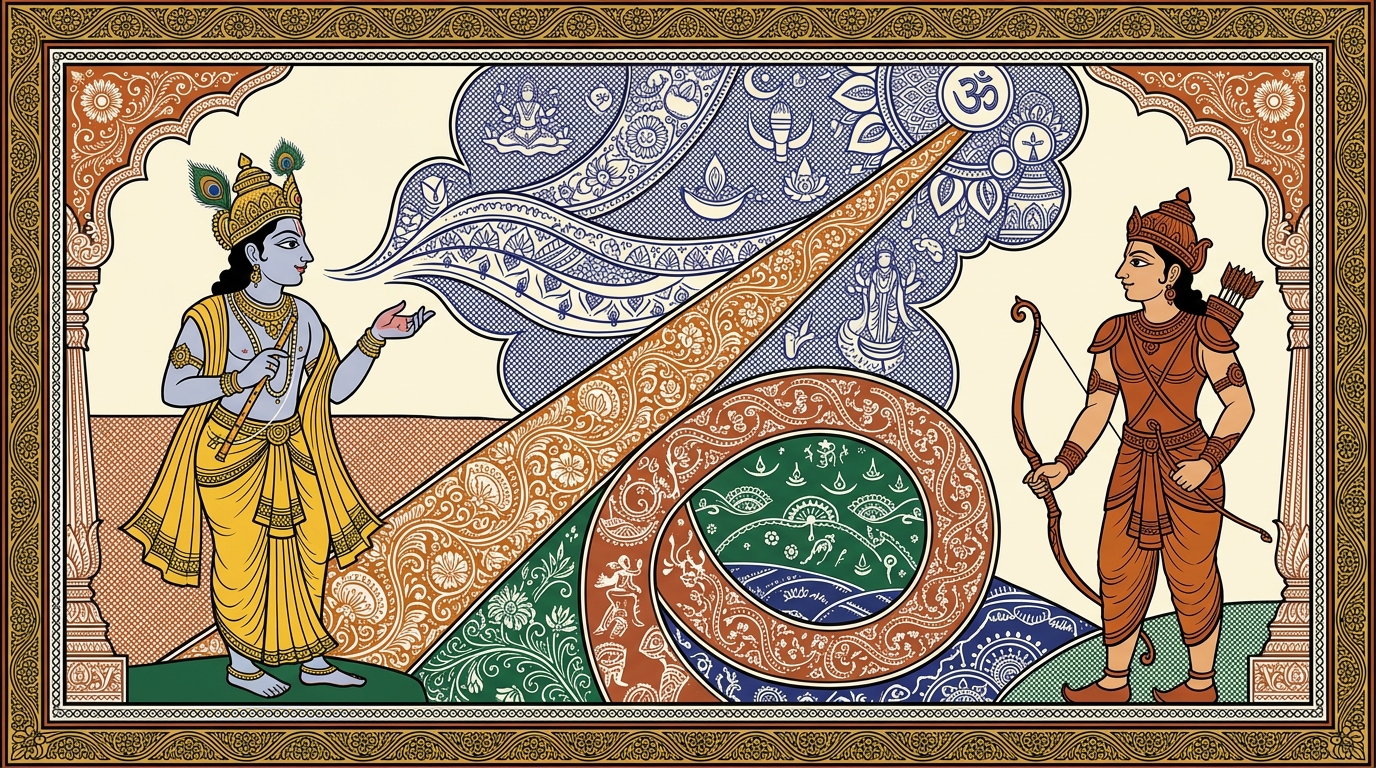
In the old gurukula on the bank of a slow river, the students had
studied for many years. They had learned the chants, the rituals, the
names of the gods, the rising and dissolving of the worlds. Now, on a
quiet evening with the lamps newly lit, the eldest teacher gathered
them close. There was something in his face they had not seen before
— the look of a man about to share the last and most carefully kept
secret of all.
"You have learned much," the old teacher said, "about how beings come
forth and how they dissolve. About the Imperishable beyond all change.
About the highest home from which none return." He paused. "But there
is one thing more, and it is this: not everyone who leaves the body
travels the same road."
The students leaned in. The river murmured beyond the wall.
"There are two roads after death," the teacher went on. "Two ancient
paths, as old as the world itself. By one road, the departing yogi
goes and never comes back — he reaches the changeless home and stays.
By the other road, the departing one goes, rests a while, and then
returns — back to birth, back to the turning wheel, to live and learn
and try again."
A young student, eyes wide, asked, "Which road will I take, teacher?"
The old man smiled, but he held up a hand. "Not yet. First you must
know that the two roads exist. First you must know there is even a
choice to understand. A traveller who does not know the fork in the
path cannot prepare for it. So before I describe the roads
themselves" — and here his voice grew gentle and certain, the way
Krishna's must have sounded on the chariot — "I am simply telling
you, my children, that the moment of departure matters. There is a
time of going that leads to no-return, and a time of going that leads
back home to be born again."
He let the words settle over the lamplit room like dusk settling over
the river.
"Tomorrow," he said, "I will tell you the two roads, one by one. For
tonight, only this: know that they are there. Knowing the map calms
the traveller, even before the journey begins."
The students sat in the warm silence, and not one of them was afraid.