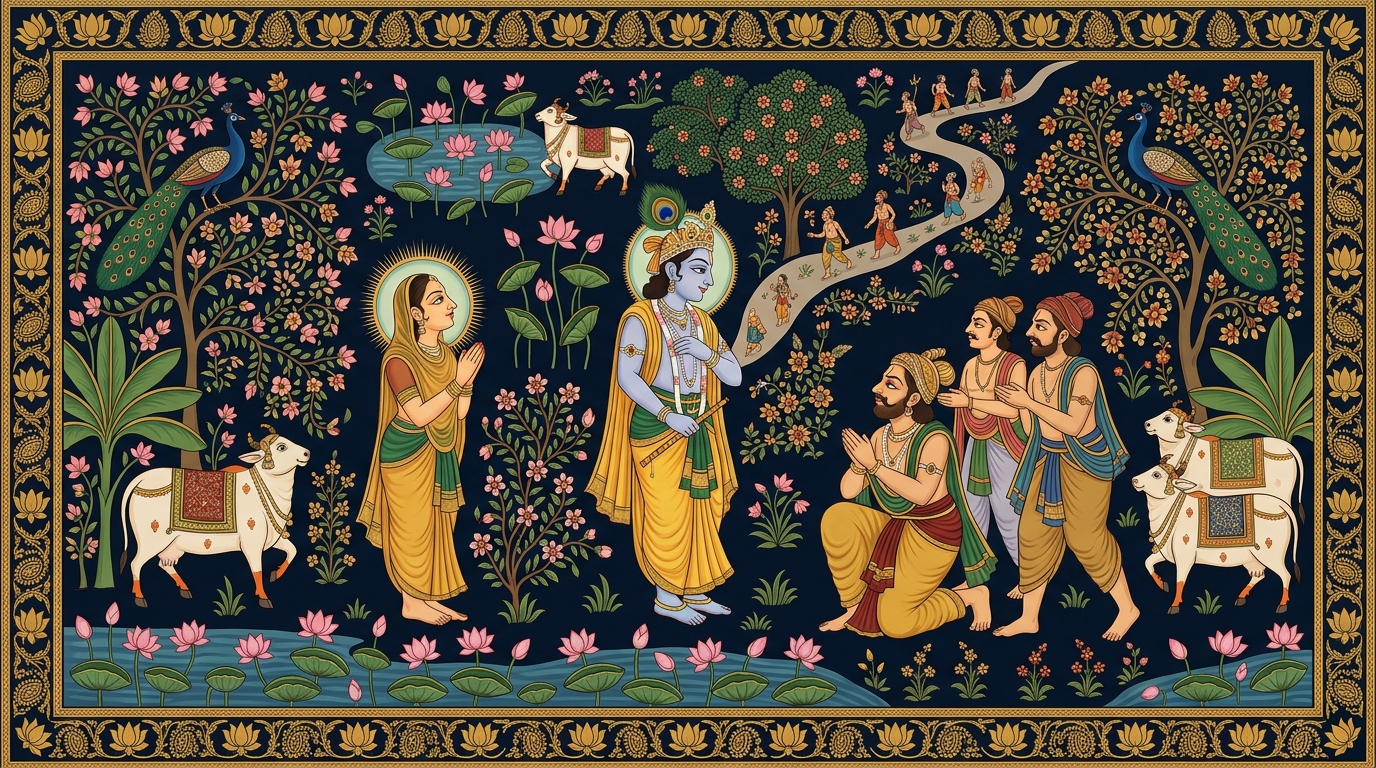
Every winter, when the mornings in Nathdwara turned cold and the temple
bells rang through the mist, Pandit Ghanshyam opened his little music room
and let new students in.
Many came. That was the first thing Meera noticed when her grandmother sent
her to learn dhrupad singing. On the first day the room was crowded — boys
and girls squeezed onto the cotton mats, tanpuras humming, everyone excited,
everyone sure they would soon sing like the great masters whose voices
floated out of the temple at dawn.
The teacher was old and gentle, with ink-stained fingers and a voice that
seemed to come from somewhere deep underground. He taught them the first
notes of a morning raag. "Sa," he sang, holding it long. "Just one note.
Sing it until it stops being a note and becomes a feeling."
By the second week, the room was less crowded. Holding one note for an hour
was boring, the missing children had decided. There were more exciting
things to do.
By the spring, only a handful remained — the ones who came every single
morning, who practised even when their throats were tired and the note
cracked and nobody was clapping. Meera was one of them. She was proud of
that. She had stopped being a beginner. She could sing the whole raag now,
every note in its right place.
One morning, after she finished, Pandit Ghanshyam was quiet for a long time.
"You sang every note correctly," he said at last. "That is a fine thing.
Few get this far." He paused. "But the raag is not the notes."
Meera frowned. "Then what is it?"
The old man closed his eyes and sang the same raag she had just sung — the
very same notes — and the room changed. The mist outside seemed to listen.
Something in Meera's chest ached, the way it ached when she watched the
deity revealed at dawn. There was a living soul inside the song, and it had
poured straight into her.
"That," he said softly, opening his eyes. "Many begin. A few work hard
enough to get the notes right. But to find the living soul inside the
music — that is given to very few, after very long. Keep going. Do not stop
at correct."
Meera walked home through the cold streets, humming, and for the first time
she understood that getting it right was only the doorway — not the room.