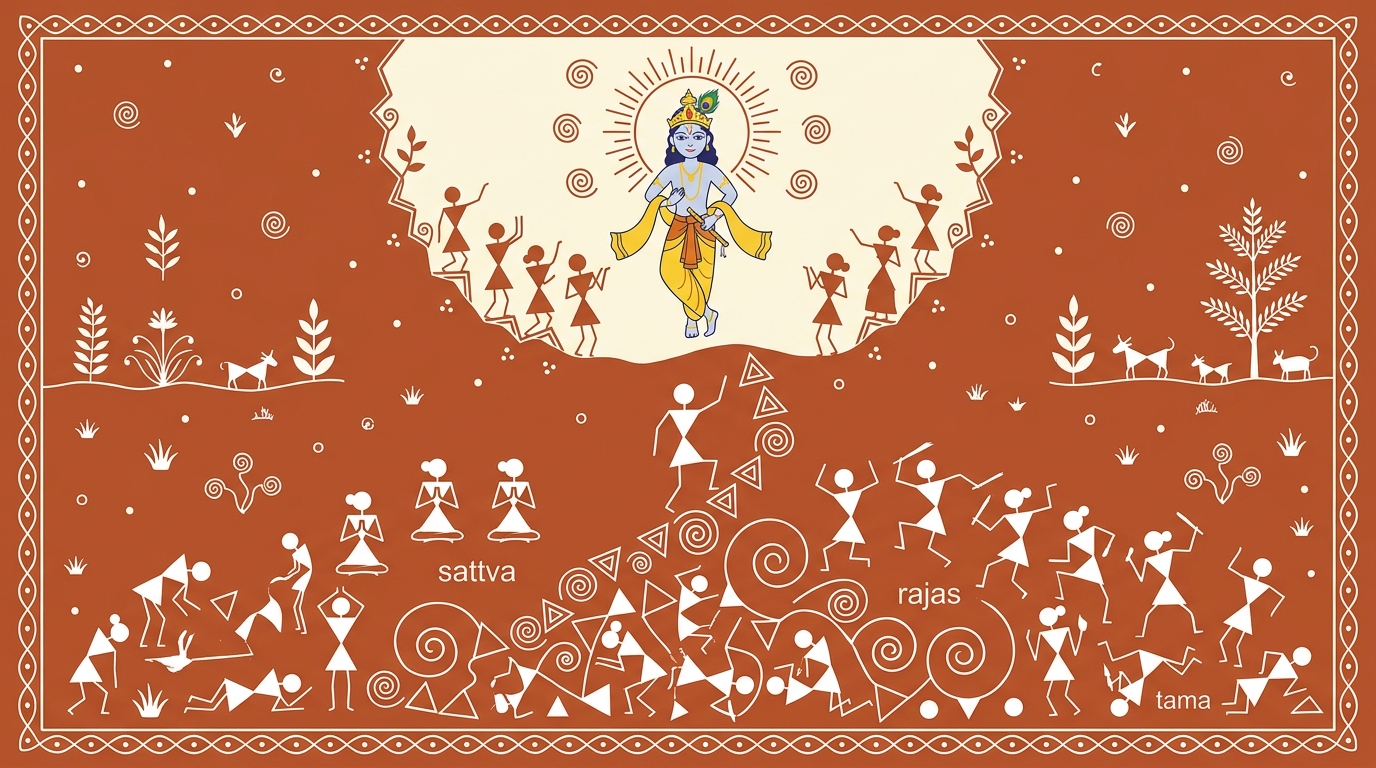
There was once a boy named Markandeya whose parents had been given a hard
choice by the sages: they could have a brilliant son who would live only
sixteen years, or a dull one who would live long. They chose the brilliant
boy, and they loved him, and every year they grew sadder as his sixteenth
birthday came near.
Markandeya saw their faces grow heavy. "Why are you sad?" he asked. When
they finally told him the truth, he did not weep. He sat very quietly, the
way the river sits between its banks, and then he said, "Then I will go to
the Lord."
On his sixteenth birthday he went to the shrine and wrapped his small arms
around the smooth stone, and he prayed, not for a longer body, but for
the One beyond all bodies.
When the appointed hour came, the dark messenger arrived with his rope to
carry the boy away. But Markandeya did not let go of the stone, and his
heart was not on his body at all. It had already climbed past the three
weathers of the mind, past wanting and fearing and dullness, up to the
Lord himself.
And so the messenger could not take him. From the shrine the Lord appeared,
bright as ten thousand dawns, and laid a hand on the boy's head.
"You have crossed beyond the three gunas," he said. "You no longer cling
to the body that is born and grows old and dies. You have found what does
not die. So you shall not be touched by birth or death or age or pain — not
now, not ever."
Markandeya rose. He felt no older and no younger; he felt simply *awake*,
in a life that had no edges. They say he lives still, the deathless boy,
wandering the world, smiling at children — because long ago he climbed above
the weather of the body and reached the One who never ends.