In a story the old teachers loved, three gardeners were each given the same
seeds and the same patch of earth at the edge of the king's orchard.
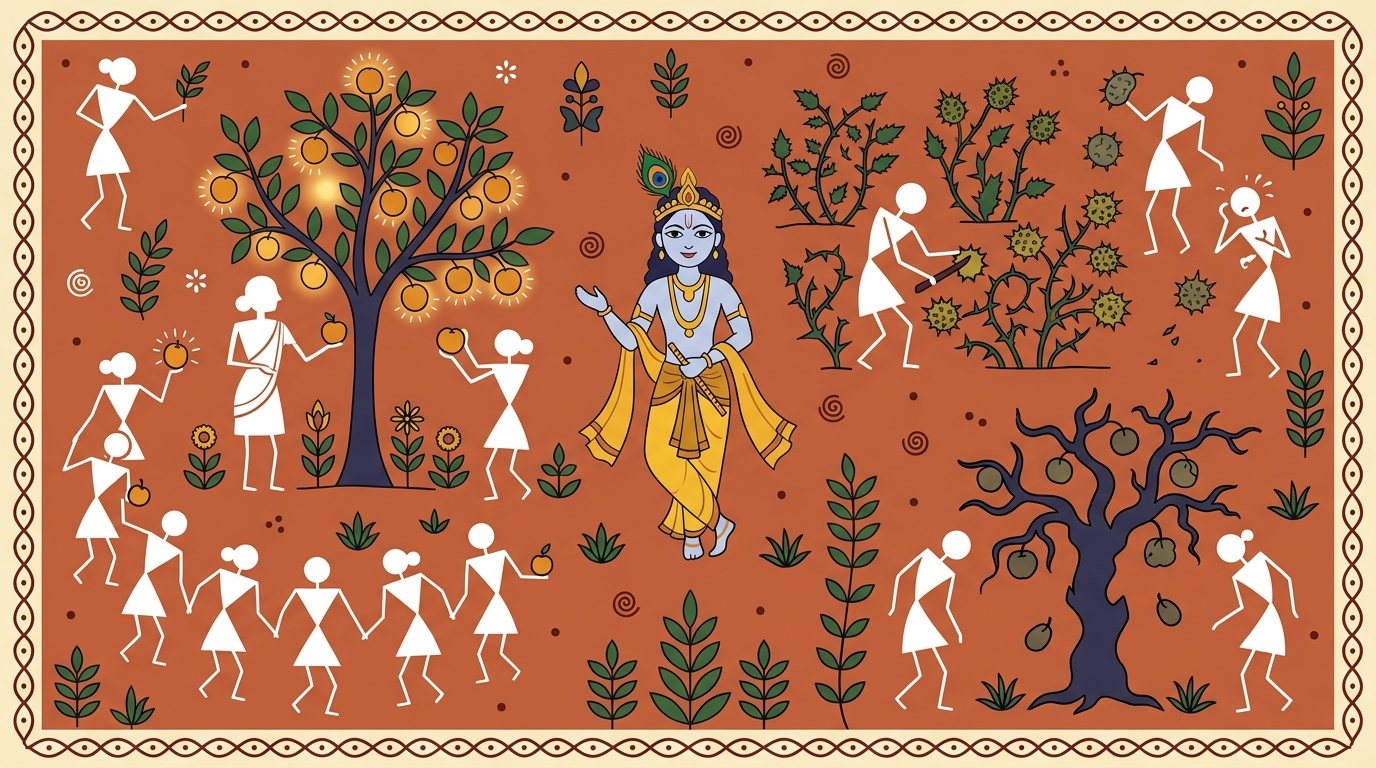
The first gardener, Shanta, worked calmly and with care. She watered at the
right time, pulled the weeds gently, and did not fret about the prize. She
worked because the work was good. When the season turned, her patch was
spotless: fruit hung clean and sweet, the soil was rich, and even passing
travellers were fed from it. Her harvest left everything brighter than
before.
The second gardener, Tivra, burned with wanting. He had to win. He yanked
plants to make them grow faster, fought with the other gardeners over water,
and lay awake every night gnawing on worry. His patch did grow, but it left
him exhausted, snapping at everyone, his hands blistered and his heart sore.
"I got my fruit," he admitted, "but it tastes of nothing but my own
aching."
The third gardener, Manda, could not be bothered. He slept in the shade,
forgot to water, scattered the seeds carelessly, and never learned which
plant was which. By season's end his patch was a tangle of weeds. He did not
even understand what had gone wrong. "I'm not sure what a garden is meant to
do," he mumbled, more confused than when he started.
The old gardener who had set them the task walked the three patches and
nodded slowly. He picked one of Shanta's clean, bright fruits, turned it in
the sun, and offered a piece to each of them.
"See the fruit each kind of work leaves behind," he said. "Calm, careful
work leaves a clean, sweet harvest. Grasping, frantic work leaves pain.
Lazy, foggy work leaves only more confusion. The seeds were the same. The
earth was the same. The water was the same. The spirit you carried into the
work — that, and that alone, is what ripened into your harvest."
Tivra looked at his sore, blistered hands. Manda blinked at his tangle of
weeds. And Shanta, who had wanted nothing but to garden well, found her
spotless harvest was somehow the sweetest of all.