Skip to content
Chapter 14 · Verse 9
🪈 Krishna speaks
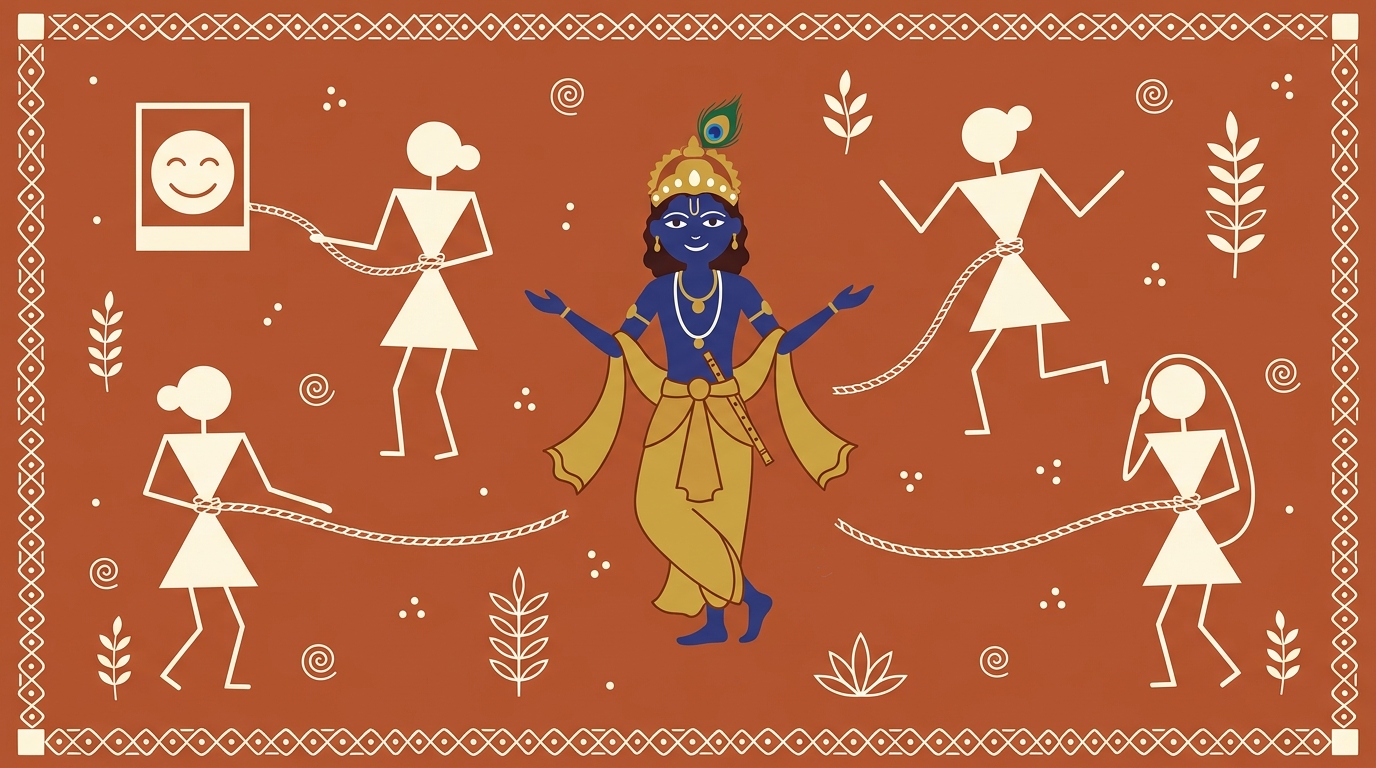
Illustration for Chapter 14, Verse 9

सत्त्वं सुखे सञ्जयति रजः कर्मणि भारत। ज्ञानमावृत्य तु तमः प्रमादे सञ्जयत्युत॥

sattvaṁ sukhe sañjayati rajaḥ karmaṇi bhārata | jñānamāvṛtya tu tamaḥ pramāde sañjayatyuta ||

Word by Word 13 words
सत्त्वम्
as to be, to exist tva the quality of being

sattva, the pure and shining quality of harmony and light

सुखे
su good, easy kha space, opening

in happiness, in pleasant ease

सञ्जयति
sam fully, together sañj to cling, to attach, to join

makes one cling, fastens, attaches

रजः
rañj to colour, to be excited

rajas, the restless quality of passion and activity

कर्मणि
kṛ to do, to act

in action, in doing and working

भारत
bharata Bharata, ancestor of Arjuna's line

O descendant of Bharata (Arjuna)

ज्ञानम्
jñā to know

knowledge, clear understanding

आवृत्य
ā toward, over vṛ to cover, to veil, to enclose

having covered over, veiling, hiding

तु
tu but, however

but, however

तमः
tam to be dark, to grow faint

tamas, the heavy quality of darkness and dullness

प्रमादे
pra forth, away mad to be careless, to be intoxicated

in heedlessness, in carelessness

सञ्जयति
sam fully, together sañj to cling, to attach

makes one cling, fastens, attaches

उत
uta and also, indeed

and also, indeed

shows how each of the three qualities holds the soul in a different way. fastens you to happiness — you love feeling calm and bright, and you do not want to let that good feeling go. fastens you to action — you love doing and getting busy and cannot sit still. And , having pulled a veil over your clear knowing, fastens you to carelessness — you forget, you drift, you stop paying attention. Three different ropes, but each one ties.

कथा

The Three Travellers at the Crossroads

From the vedantic teaching tale

Long ago, in the foothills where three roads met under an old banyan tree, a teacher sat watching travellers pass. One day, three friends arrived at the crossroads together, on their way to a great fair in the city beyond the hills. The teacher offered them rest, and as they sat, he watched them closely.

The first traveller settled in the shade, breathed the cool air, and sighed happily. "How pleasant this is," he said. "The breeze, the shade, the quiet. Let us stay a while. I do not want this good feeling to end." Hours passed, and still he lingered, unwilling to leave the sweetness.

The second traveller could not sit at all. He paced. He checked the road. "We must go, we must go! There is so much to see at the fair, so much to buy, so much to do!" His feet itched; his hands fidgeted. Even resting, he was busy inside, planning the next thing and the next.

The third traveller had stretched out and fallen fast asleep. When the others nudged him, he muttered, "Later... it doesn't matter... which fair was it again?" He had quite forgotten where they were going, and did not care to remember.

The teacher smiled and spoke. "Friends, look at yourselves. You" — he nodded to the first — "are tied by a golden thread to your happy ease. You" — to the second — "are tied by a racing thread to your doing and wanting. And you" — he touched the sleeper's shoulder — "are tied by a grey thread to your forgetting. Each thread is a different colour, but each one holds you to this crossroads."

"Then how does anyone ever reach the fair?" asked the first.

"By seeing the thread," said the teacher. "The moment you notice the rope — golden, racing, or grey — your hand can begin to loosen it. The traveller who watches his own threads is already half free."

The three friends looked at one another, and at the three roads, and for the first time each one saw the colour of his own quiet rope.
चिन्तनम्

Sattva ties us to nice feelings, rajas to being busy, tamas to forgetting. Which of these three ropes do you notice most often in yourself? What happens when you simply notice it is there?