In an age long past there ruled a king named Vichitra, and never in all the
land had there been a king so busy. From the first grey light of morning to
the last red coal of evening, Vichitra worked. He built. He conquered. He
counted. He wanted.
When he saw a hill, he wished to crown it with a fort. When he saw a river,
he wished to bridge it. When he saw a neighbour's field, he wished it were
his own. His ministers ran panting behind him with scrolls and seals, for the
king gave a new order before the last one was finished.
"Sire, you have ten palaces," they said.
"Then I shall have eleven," said the king, and his eyes shone like a fire
that has just been fed.
One evening a wandering sage came to the gate, dusty and calm, and asked for
a single night's rest. The king, who never stopped, agreed only because the
sage said something curious: "I will show Your Majesty the rope that ties you."
"I am tied by nothing," laughed Vichitra. "I am the freest king alive! I do
whatever I wish."
"Then wish to sit still," said the sage, "for the space of one hour. Just
sit. Want nothing. Build nothing. Count nothing."
The king sat. His foot began to tap. His fingers drummed. His mind leapt to
the unbuilt fort, the unbridged river, the field that was not yet his. Before
a quarter of the hour had passed he sprang up, his heart pounding.
"I cannot!" he cried. "There is too much to do!"
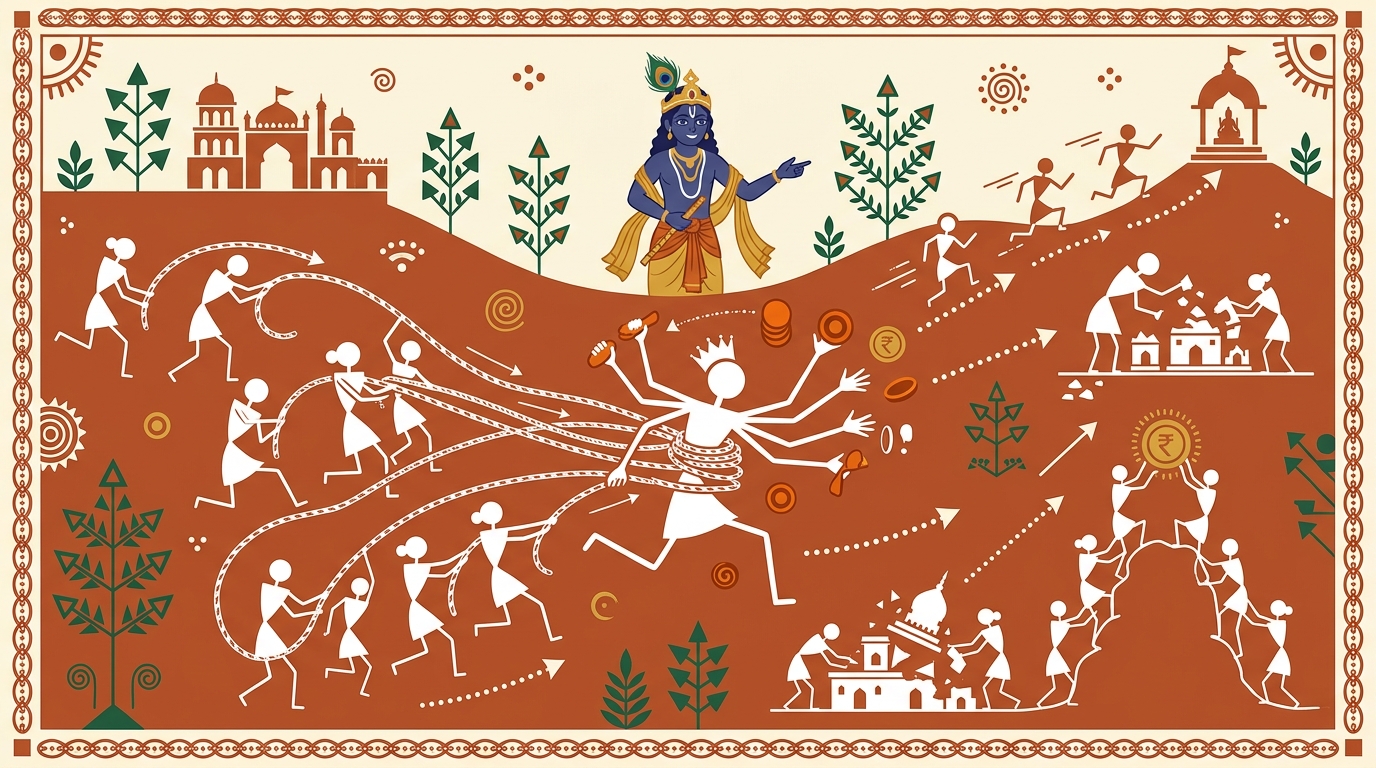
The sage nodded gently. "That, great king, is the rope. It is not made of
iron. It is made of wanting. You think you hold your kingdom — but your
kingdom holds you. The thirst to do and to have has tied your hands to the
plough, and you cannot let go even for an hour."
Vichitra grew very quiet. For the first time he felt the rope, soft and
invisible, wound a thousand times around his restless heart. And in that
quiet, just for a breath, he was free.