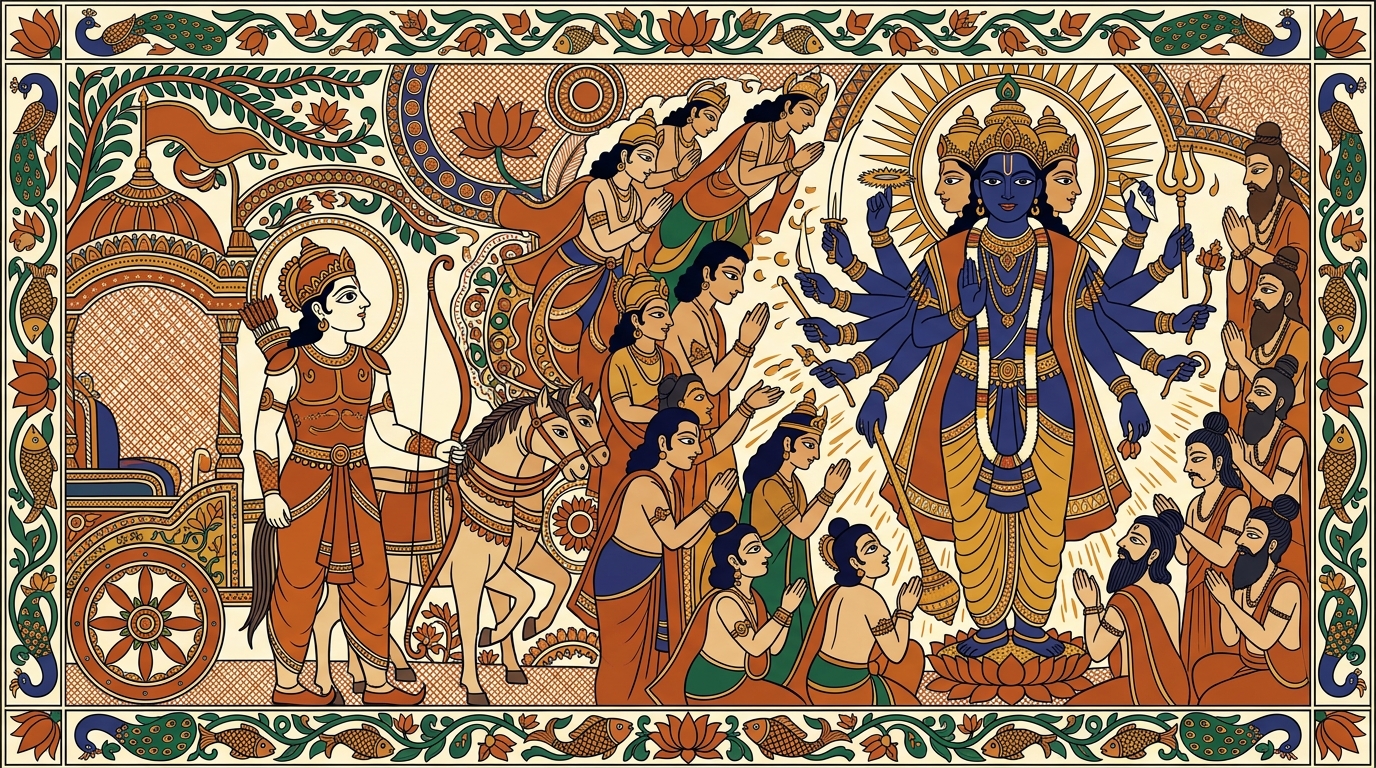
Arjuna had expected to feel alone in his astonishment. After all, who
else had ever been given a divine eye to see such a thing? But as he
looked into the great form, he discovered he was not the only one
watching in wonder. The whole of heaven was watching too.
He saw them now, gathered all through the vast spaces of the vision: the
gods. Not one or two, but hosts of them: great shining throngs, more
than any festival crowd, the gleaming dwellers of the heavens.
And they were moving toward the form. One after another, the gods were
entering into it, slipping into that immense body the way rivers slip
quietly into the sea, returning to the source they had come from. Some
went gladly. But others, Arjuna saw, drew their breath in awe — even
these mighty gods, who feared nothing in the three worlds, looked upon
the form with wide eyes. They pressed their palms together before their
faces, the same way Arjuna himself was holding his hands, and they sang
out praises as they came.
Then Arjuna heard another sound rising over the great hush — a chorus of
clear, calm voices.
These were the maharshis, the greatest of all the seer-sages, and the
siddhas, the perfected ones who had completed the long journey of the
spirit. They were not trembling. They had seen deeply enough to greet
the vision not with fear but with blessing. "Svasti!" they called — "May
it be well! May all be well!" — the ancient word of peace and good
fortune. And then, in rich and rolling hymns, in verses full and
beautiful, they began to praise the Lord, their voices weaving together
like many instruments in one great song.
Arjuna listened, and a little of his fear softened. If the very gods
folded their hands here, if the wisest sages who had ever lived could
only bow and sing — then his own trembling wonder was not foolish at all.
It was the only right thing to feel.
Quietly, he added his own silent voice to theirs. "May it be well," he
breathed. "May all be well."