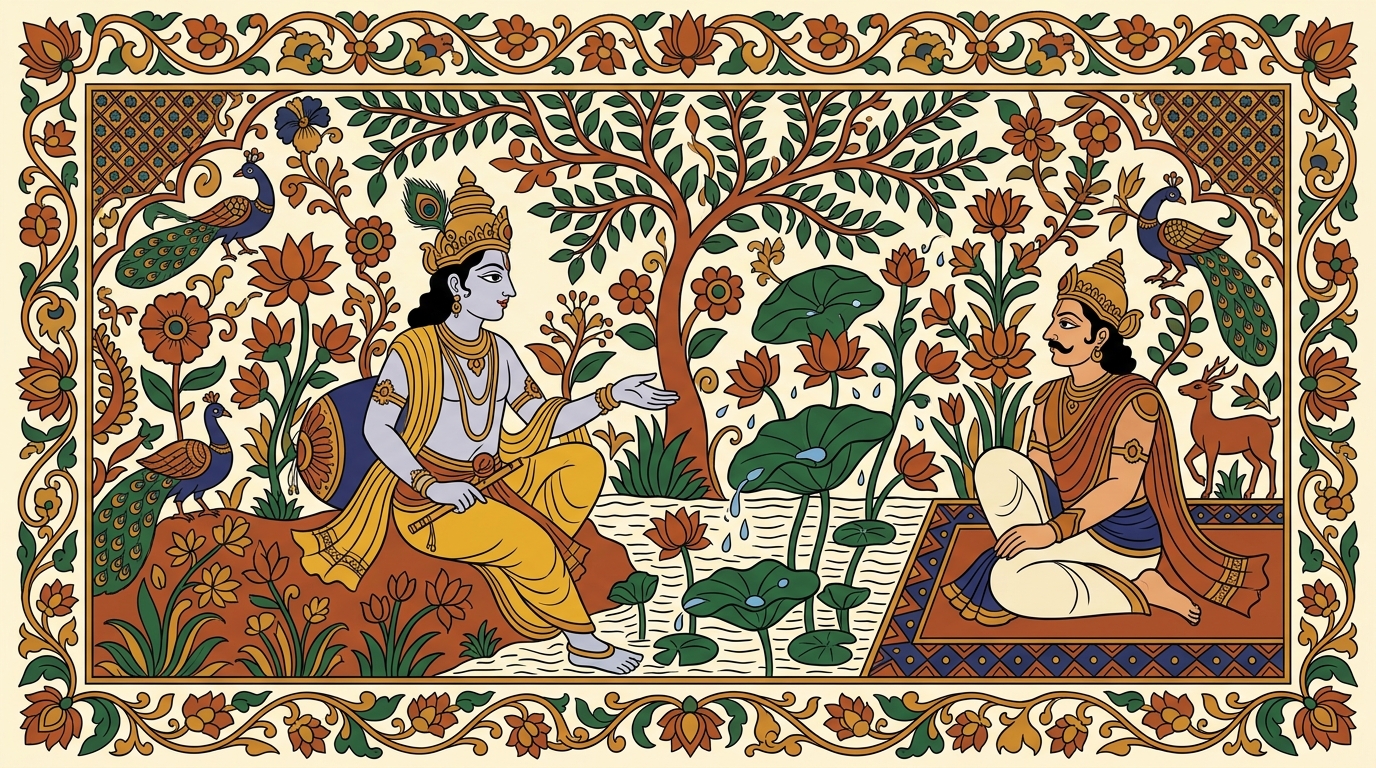
At the edge of a still green pond lived a lotus, and on the lotus grew a
broad round leaf. A dragonfly named Anu liked to rest on it in the early
morning when the air was cool.
One day a great rain came. It hammered the pond, dimpling the water,
bending the reeds, soaking the frogs until they shone. Anu darted under
the lotus leaf to shelter, and from there she watched the storm.
When at last the clouds broke apart and the sun returned, Anu climbed
back onto the top of the leaf — and stopped, amazed. Everything around
was drenched. The reeds dripped. The frogs glistened. But the broad
lotus leaf was perfectly dry. The rain had fallen on it all morning, yet
the water had simply rolled into round silver beads and slipped off the
edge. Not a single drop had soaked in.
"How are you not wet?" Anu asked the leaf. "The whole sky fell on you."
"It fell on me," the leaf agreed, "but I did not hold it. I let each drop
arrive, and I let each drop go. I never tried to keep the water. So the
water never stayed."
Anu thought about the frogs, who had clung to the rocks and grown heavy
and soaked, and the reeds, who had leaned and gathered puddles in their
folds. They had wanted to catch the rain. The leaf had only let it pass.
Later, a wise traveler resting by the pond saw the dry leaf gleaming in
the wet world and smiled to himself. "That," he said quietly, "is how to
live. Do your work. Let the world rain its rewards and its troubles down
on you. But offer it all to something larger than yourself, and cling to
none of it. Then the doing will roll off you like water off a lotus
leaf, and you will stay clean and light, no matter how hard it pours."
Anu spread her wings. Below her the leaf held its perfect dryness, asking
for nothing, keeping nothing — and that, she understood, was why it was
free.