Skip to content
Chapter 18 · Verse 63
🪈 Krishna speaks
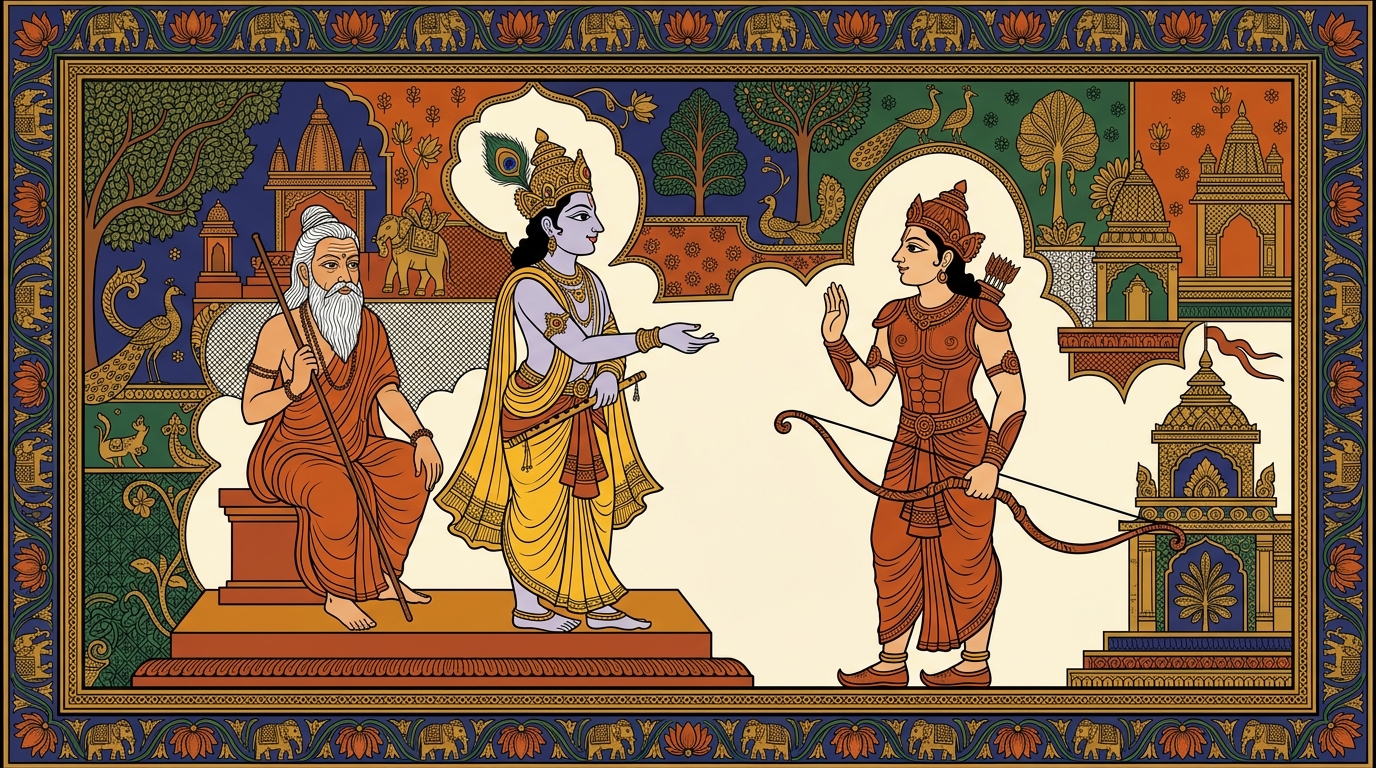
Illustration for Chapter 18, Verse 63

इति ते ज्ञानमाख्यातं गुह्याद्गुह्यतरं मया। विमृश्यैतदशेषेण यथेच्छसि तथा कुरु॥

iti te jñānamākhyātaṁ guhyādguhyataraṁ mayā | vimṛśyaitadaśeṣeṇa yathecchasi tathā kuru ||

Word by Word 14 words
इति
iti thus, so

thus, in this way

ते
yuṣmad you

to you, for you

ज्ञानम्
jñā to know jñāna knowledge, wisdom

knowledge, wisdom

आख्यातम्
ā toward khyā to tell, to declare

has been told, has been declared, has been explained

गुह्यात्
guh to hide, to conceal guhya secret, hidden

than the secret

गुह्यतरम्
guh to hide guhya secret tara more — comparative

more secret, deeper still, the most hidden of all

मया
mad I, me

by Me

विमृश्य
vi fully, apart mṛś to touch, to ponder, to reflect

having pondered fully, having thought it over carefully

एतत्
etad this

this

अशेषेण
a not śiṣ to leave over aśeṣa without remainder, complete

completely, without leaving anything out, in full

यथा
yathā as, in the manner that

as, in whatever way

इच्छसि
iṣ to wish, to desire

you wish, you choose

तथा
tathā so, in that manner

so, in that way

कुरु
kṛ to do, to act

do, act

gathers everything together and steps back. "I have told you the wisdom now," he says, "the secret deeper than any secret." Then he does something a forceful teacher never would: he hands the choice to . "Think it over completely, leaving nothing out — and then do exactly as you decide." He does not push or command. Real wisdom is offered, not forced. A free heart, having understood, must choose for itself.

कथा

The Choice Dadu Would Not Make for Him

An original story

It was the last evening of the school holidays, and Aarav sat on the steps with a hard decision pressing on him.

A famous art teacher in the city had offered him a place in her class, but it meant leaving the village for months, living with cousins he barely knew, being far from Dadu and the beach and everything he loved. Part of him ached to go. Part of him was terrified.

"Just tell me what to do, Dadu," he begged. "You always know. Tell me to go, or tell me to stay, and I'll do it."

Dadu set down his net. The lamp threw their two shadows long across the wall.

"I could tell you," Dadu said slowly. "And maybe you'd obey me. But then it would be my choice riding inside your life, not yours. That is not how I want to love you."

So instead he talked. He laid it all out, calmly and completely, leaving nothing hidden. He spoke of how rare such a teacher was, and how Aarav's hand had always known how to draw before his mind caught up. He spoke, honestly, of the homesickness, of the cousins, of how hard the first weeks would be. He named the fear and the hope side by side, neither hiding the hard parts nor pretending the gift away.

"There," Dadu said at last. "Now you know everything I know. I have held nothing back from you."

Aarav waited for the verdict. It did not come.

"And now?" Aarav asked.

Dadu smiled and rested a warm hand on his head. "And now, my boy, you think it over fully — all of it — and then you do as your own heart decides. That is the gift I can give you that telling you what to do never could. The truth, laid out plain, and the freedom to choose what you make of it."

Aarav looked out at the dark water for a long, long time. And somewhere in that quiet, with everything laid before him and no one pushing, he began — slowly, truly his own — to choose.
चिन्तनम्

Think of a time someone gave you all the facts but let you make the choice yourself, instead of deciding for you. Why might that kind of trust be a bigger gift than simply being told what to do?