Skip to content
Chapter 18 · Verse 57
🪈 Krishna speaks
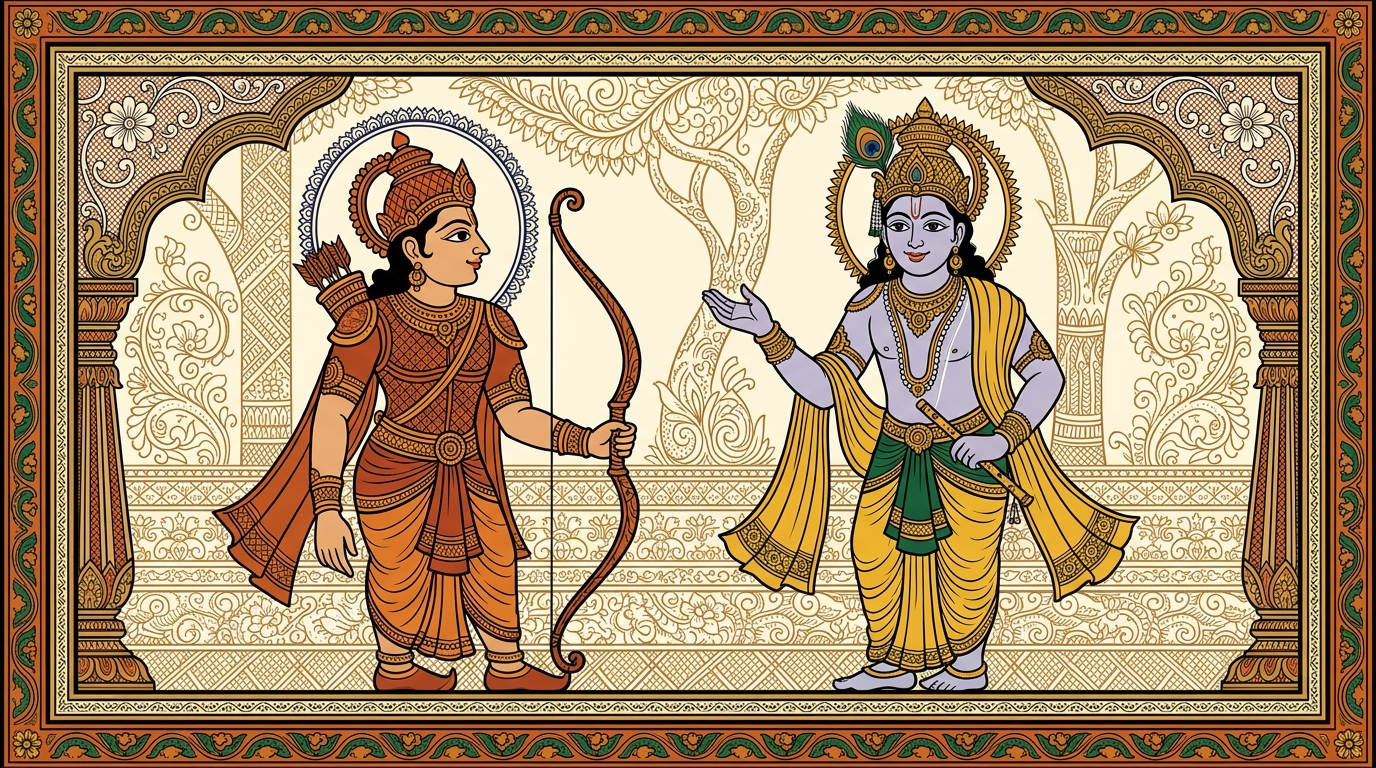
Illustration for Chapter 18, Verse 57

चेतसा सर्वकर्माणि मयि संन्यस्य मत्परः। बुद्धियोगमुपाश्रित्य मच्चित्तः सततं भव॥

cetasā sarvakarmāṇi mayi saṁnyasya matparaḥ | buddhiyogamupāśritya maccittaḥ satataṁ bhava ||

Word by Word 11 words
चेतसा
cit to be aware, to think cetas mind, heart, awareness

with the heart, with the mind

सर्व
sarva all, every

all, every

कर्माणि
kṛ to do, to act karman action, deed

actions, deeds

मयि
mad I, me

in Me, to Me

संन्यस्य
sam fully, together ni down as to throw, to place

having laid down, having fully surrendered, having handed over

मत्परः
mad me para highest, devoted to

holding Me as the highest, devoted to Me

बुद्धियोगम्
budh to know, to awaken buddhi intellect, clear understanding yuj to join, to yoke yoga union, discipline

the yoga of steady understanding, the discipline of a wise mind

उपाश्रित्य
upa near ā toward śri to take refuge, to lean on

having taken refuge in, having leaned upon

मच्चित्तः
mad me cit to be aware citta thought, attention

with your thought fixed on Me

सततम्
sa with tan to stretch, to continue satata constant, unbroken

always, constantly, without a break

भव
bhū to be, to become

be, become

gives a simple, beautiful instruction. Do your work, all of it, but in your heart hand every deed over to Me, like giving someone a gift to carry. Hold Me as the dearest thing of all. Lean on a calm, clear mind instead of a worried one, and let your thoughts come home to Me again and again. Do this always, and your work will no longer weigh you down. You act with your hands, but you rest in Me.

कथा

The Potter Who Gave Every Bowl to Krishna

From the mythological

In a village near the river Yamuna, in the days when still walked among cowherds, there lived an old potter named Kumbhaka. From dawn till dusk his wheel spun, and from the spinning grey clay came bowls and pots and little lamps for the whole village.

Kumbhaka was not a famous man. He did not fight in wars or sit in palaces. He only made pots. But there was something about him that people noticed: he was never frightened, never grasping, never sour, even when a whole tray of pots cracked in the kiln.

A young traveller once stopped to watch him work and could not understand it. "Old father," he said, "you work harder than anyone I have seen, yet you carry none of the worry. How?"

Kumbhaka kept his foot moving on the wheel. "Long ago," he said, "I worried over every pot. Will it sell? Will it break? Will they praise me or laugh? My hands shook, and the clay felt it. Then one evening I heard the flute of the cowherd boy from across the fields, and a thought came to me clear as water: every pot I make, I will make for Him."

He lifted a finished bowl and turned it in the light. "So now, when I begin a pot, in my heart I say, 'This is Yours, .' When it is done, I set it down and say, 'This too is Yours.' Whether it sells or breaks is no longer my burden to carry. I only have to make it as well as I can and hand it over. My hands are busy all day, but my heart is light as a lamp flame."

The traveller watched the next bowl rise from the spinning clay, smooth and sure.

"I am not a wise man," Kumbhaka said. "I cannot explain the great truths. But I have found one small thing that is true: do your work fully, give it to God with your whole heart, and keep thinking of Him while your hands move. Then even a potter's wheel becomes a kind of prayer."
चिन्तनम्

What is one task you do almost every day? What would it feel like to do it carefully and then hand the result over, instead of worrying about how it turns out?