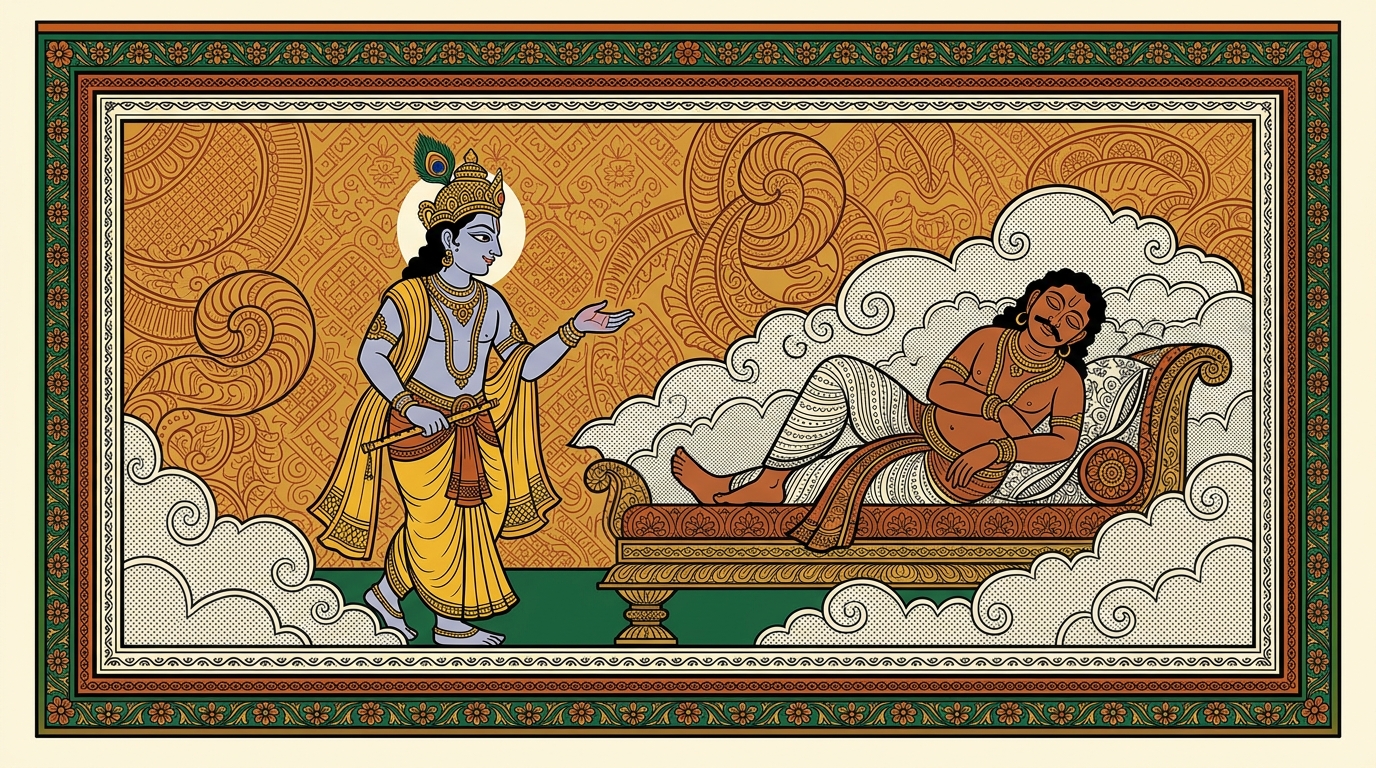
Among the old stories there is a demon named Kumbhakarna, the giant brother
of the demon-king Ravana. He was famous across the three worlds for one thing
above all: he loved to sleep.
He had not always been so. Long ago he had performed great austerities, and
the gods, alarmed at his strength, had arranged that he would sleep for six
months at a stretch and wake for only a single day. But Kumbhakarna came to
treasure his sleep the way a miser treasures gold. He grew enormous and
sluggish, mountains of him piled upon his bed, and his snores shook the
palace walls.
When at last he was woken — and it took drums, and elephants walking over
him, and cartloads of food heaped at his side — he would rise only to eat
everything in sight, grumble that the day was a nuisance, and long to lie
down again. He did nothing useful. He dreamed of nothing high. His comfort
came entirely from sleep, from sloth, from not bothering, and it left him as
dull when he woke as when he had lain down.
There was a kind of happiness in it, he insisted. The warm dark of sleep. The
pleasure of no effort. The relief of caring about nothing. But it was a
happiness that fooled him from the first breath to the last, for it never
made him wiser, never made him kinder, never made him strong in any way that
mattered. It only made him more like a stone.
The sages who told his story did not tell it to mock him. They told it as a
warning. "Beware the joy that asks nothing of you," they said. "There is a
comfort that comes from sleep and laziness and not paying attention — and it
feels easy, but it clouds the mind at both ends, the beginning and the close.
A whole life can sink into that fog and call it rest. Krishna named this the
lowest of the three happinesses: the dark one, that deludes you start to
finish."
And the listeners, who all knew the warm pull of the unmade bed and the
undone task, listened closely.