The sea breeze had cooled by evening, and Aarav sat on the warm steps of
Dadu's house in Puri with three little things in front of him: a fistful of
boiled sweets from the market, a single ripe mango, and a small clay cup of
bitter neem tea that his grandmother made him drink when the weather turned.
"Dadu," Aarav grumbled, "why is happiness so confusing? The sweets make me
happy, the mango makes me happy, and even when I finish my homework I feel
happy. But they don't feel the same."
Dadu lowered himself onto the step beside the boy, slow and creaky like an
old boat being eased into water. He looked at the three things and chuckled.
"You have noticed something many grown men never notice in their whole
lives," he said. "Not all happiness is the same kind. There are, in truth,
three kinds, and the wise learn to tell them apart, the way a fisherman
learns to read three different clouds."
Aarav popped a sweet into his mouth. "Three kinds? They all feel nice."
"They feel nice at different moments, and they leave you in different
places," said Dadu. "Eat the sweets, and the gladness is bright and quick,
but in an hour your teeth ache and you want more. That is one kind. The
mango is patient — you wait all summer for it, and the sweetness is honest
and full. That is another. And the neem tea —" he tapped the bitter cup and
smiled "— is no fun at all going down, but it clears your blood and keeps
you well for weeks. That is a third kind altogether."
Aarav made a face at the neem cup. "So the worst-tasting one is good for me?"
"Sometimes the thing that is hard at the start is the very thing that brings
you the longest joy," Dadu said. "And sometimes the thing that is sweet at
the start turns sour later. You cannot judge happiness only by its first
taste. You have to ask: where does it leave me in the end?"
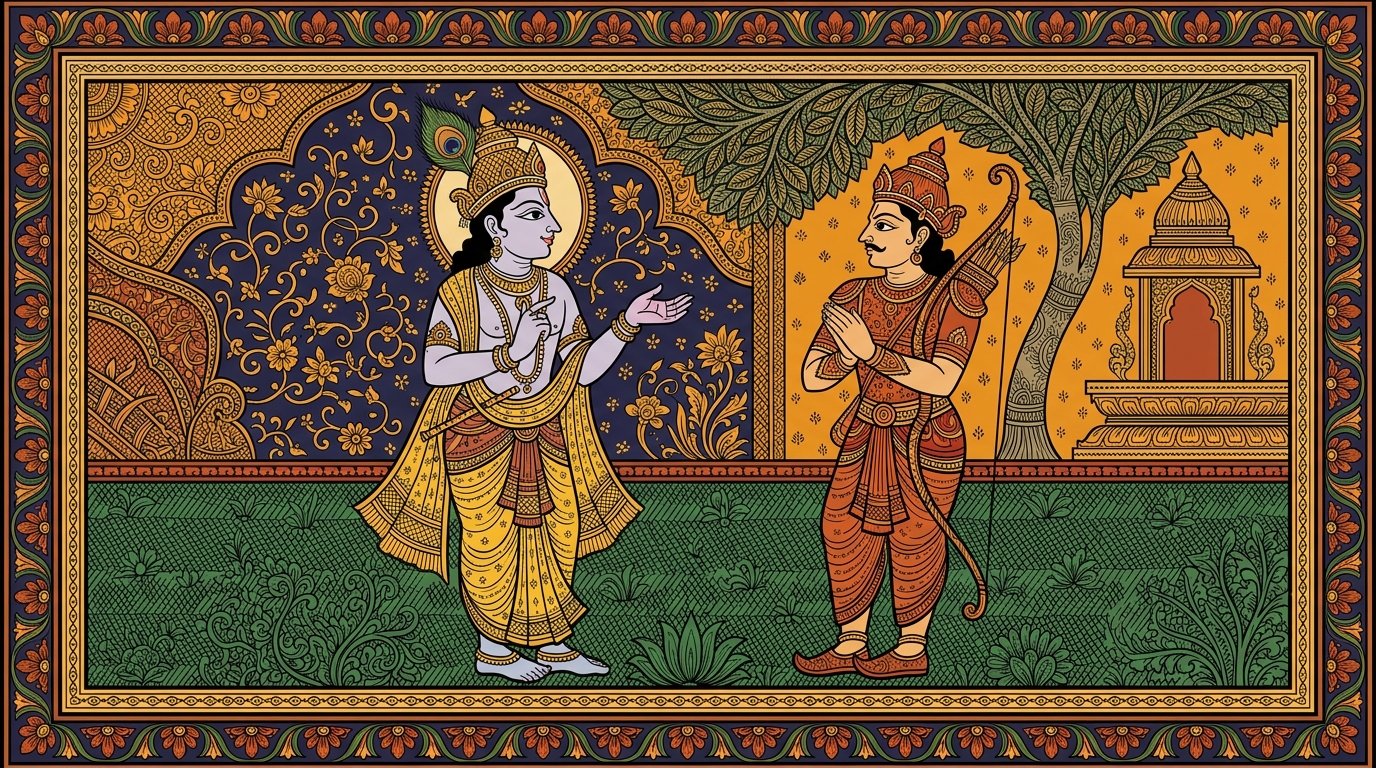
He gestured at the darkening sea. "Krishna once told a great warrior the
very same thing — listen, he said, for happiness comes in three kinds. Tonight
I am only repeating the old lesson, with sweets and a mango and a cup of
bitter tea."
Aarav looked at the three things again, and this time they did not all look
the same.