King Vena was not content to be remembered as a good king. He wanted to
be remembered as the greatest king who had ever lived, and the only way
he could imagine proving it was to build something taller, grander, and
more dazzling than anyone had ever built before.
"I will raise a tower," he declared, "so high that the gods themselves
must look up to see its golden roof. When travelers from distant lands
see it, they will say only one name — Vena, Vena, Vena."
He did not build it for shelter. He did not build it for his people. He
built it for the sound of his own name.
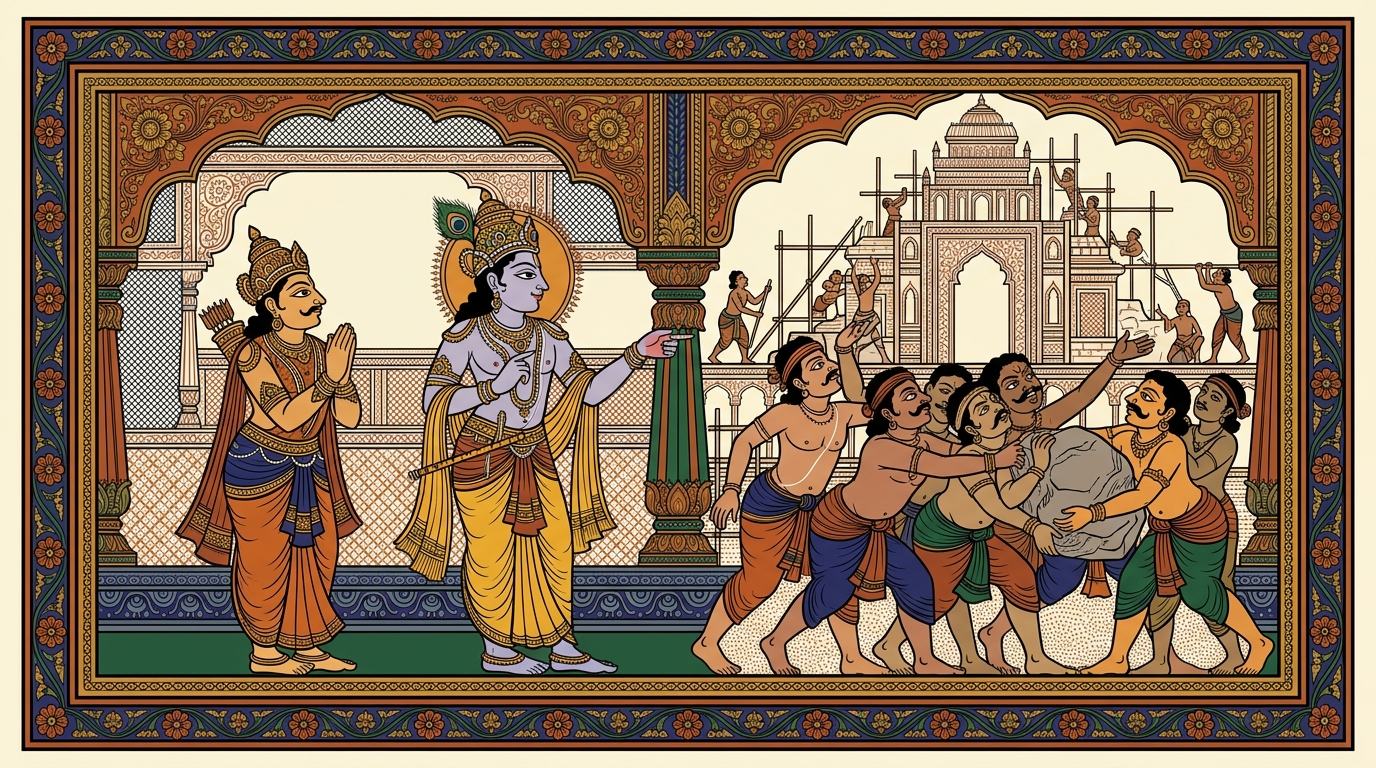
The work began, and it was brutal. Vena drove his builders without rest.
Thousands of workers hauled stone up wooden ramps under the burning sun.
Whenever a level was finished, Vena would frown and shout, "Higher! It
must go higher! What good is it if the king next door has a tower nearly
this tall?" And so the strain doubled, and then doubled again. Backs
bent, hands bled, and the king paced below, never satisfied, always
craving one more cubit of height.
Each evening Vena climbed the unfinished steps and surveyed the land. "I
did this," he would say to himself, thumping his chest. "Not the masons,
not the gods, not the years of others before me. I. Me. Vena." The
bigger the tower grew, the bigger his "I" grew with it, until there was
hardly room in his heart for anything else.
A wandering sage paused at the foot of the great tower one day and
watched the endless, frantic labour: the whips, the shouting, the
exhausted workers, the king devouring himself with hunger for glory.
"Such a mountain of effort," the sage murmured. "Such a furnace of
wanting. And all of it spent to carve one small word, his own name,
into the sky."
The tower did rise very high. People did say "Vena, Vena." But the king
was never once at peace. The moment one craving was fed, a hungrier one
took its place, and the strain never ended, because a fire that burns
for itself can never burn down to rest.