On the night of a great festival in the old kingdom of Vidarbha, a
grandmother named Sandhya gathered her grandchildren on the cool stone steps
of the temple courtyard. The whole town glowed with little oil lamps, and
the children's eyes were wide.
"Tonight," she said, "I will teach you a secret about why the same thing can
feel so different. Watch." She set three clay lamps in a row before them.
She lit the first with a clean white cotton wick and pure ghee. It burned
tall and steady, bright and calm, and the children's faces relaxed in its
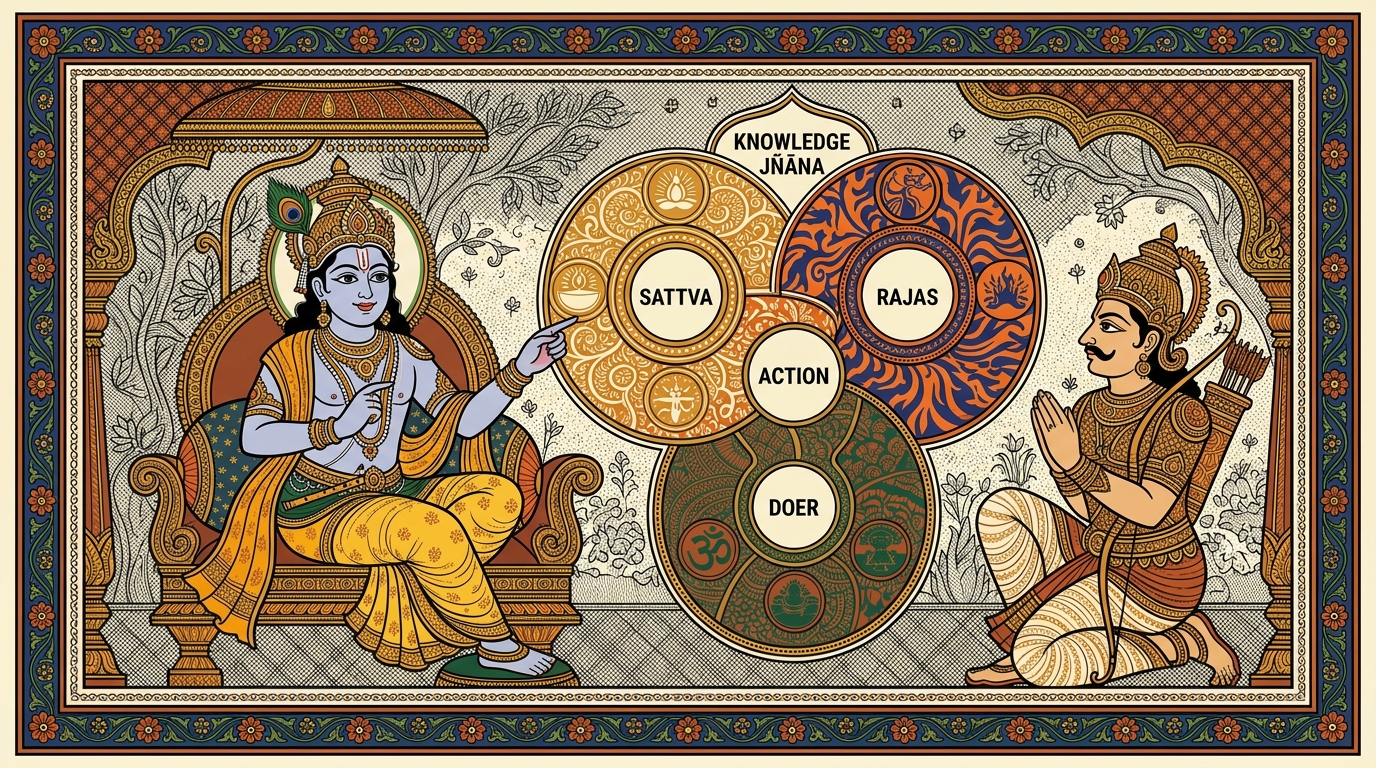
glow. "This," said Sandhya, "is the sattva flame — clear, gentle, true. When
knowledge wears this colour, you see things as they really are. When a deed
wears it, the deed is calm and selfless. When a person wears it, they are
peaceful and steady."
She lit the second lamp with too much oil and a thick wick. It flared up
hot, leaping and crackling, throwing wild shadows that danced on the temple
walls. The children flinched and giggled. "This is the rajas flame," she
said. "Restless, hungry, always grasping for more. Knowledge in this colour
sees only differences and quarrels. A deed in this colour is full of
striving and want. A person in this colour can never sit still."
She lit the third with a soggy, half-burnt wick. It sputtered, smoked, and
gave almost no light at all, just a dull red coal. "And this," she said
softly, "is the tamas flame. Heavy, dim, full of smoke. Knowledge here is
confused and clings to one small wrong idea. A deed here is careless and
lazy. A person here would rather sleep than see."
The children looked from lamp to lamp: the same clay, the same fire, three
completely different flames.
"The world is made of these three strands woven together," said Grandmother
Sandhya, "in everything you know, everything you do, and everyone you meet.
Learn to spot which flame is burning, and you will understand people, and
yourself, far better. Now lean close, little ones. I will tell you each
one, just as my own grandmother told me."