Meera had asked her grandmother a sharp little question. "If fresh food is
so good," she said, "and spicy food makes you jittery — then what's left?
What's the worst kind?"
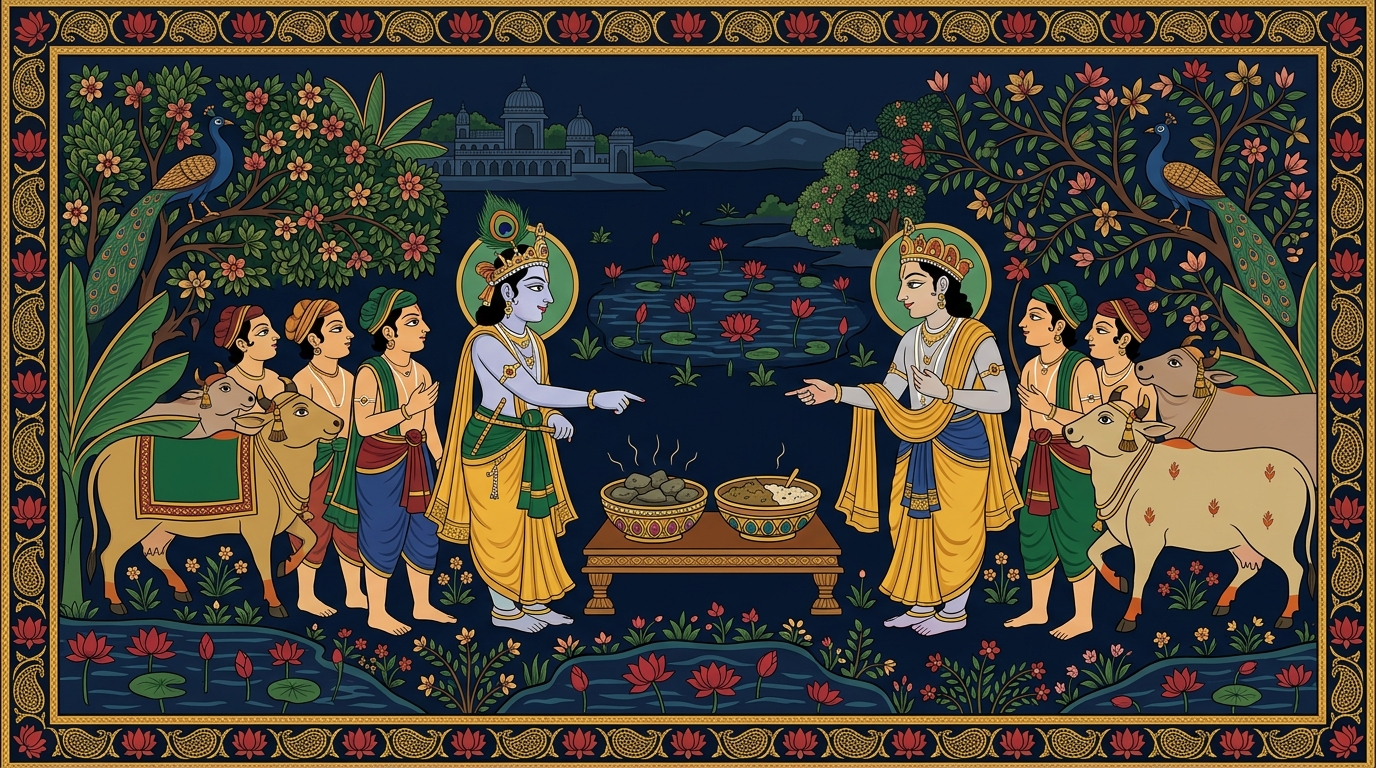
Dadi did not answer with words. She answered with two bowls.
On Sunday morning, she cooked a small pot of khichdi, rice and dal together,
soft and warm, smelling of cumin and ghee. She ladled half of it into a bowl
and set it in front of Meera. "Eat this now," she said. "While it is alive."
The khichdi was gentle and comforting. Meera felt warm and settled, the way
she did after a good story.
Then Dadi took the other half, poured it into a second bowl, and pushed it
to the very back of the kitchen shelf. "We will leave this one," she said.
"For three days."
Meera forgot about it. But on Wednesday, Dadi brought the second bowl down
and set it on the floor between them.
It did not look like the same food anymore. The khichdi had gone grey and
dry and stuck together in a hard, sad lump. It had lost all its smell of
cumin; now it had a different smell, sour and faintly rotten, that made
Meera wrinkle her nose and lean back. Its taste, Dadi explained, would be
gone; its life had simply left it, hour by hour, while it sat in the dark.
"This is the third kind of food," Dadi said quietly. "Stale, tasteless,
gone-off, kept too long, left over, unclean. The first bowl and this bowl
were once the very same khichdi. Time was the only difference."
Meera stared at the grey lump. "Why would anyone eat that?"
"Sometimes because they did not notice it had died," said Dadi. "Sometimes
because they are too tired or too dull to make something fresh. But the old
book says food like this feeds the sleepy, heavy part of us. It does not
give life — it takes it. Eat it, and you feel foggy, slow, and dull, as if a
grey cloth has been thrown over your mind."
She carried the spoiled bowl out to the compost heap by the tulsi plant.
"Food is not just what it is made of," she called back. "It is also when. The
same dish can lift you up while it is fresh — or weigh you down once its
time is gone."
Meera looked at the empty first bowl, still faintly warm, and understood.