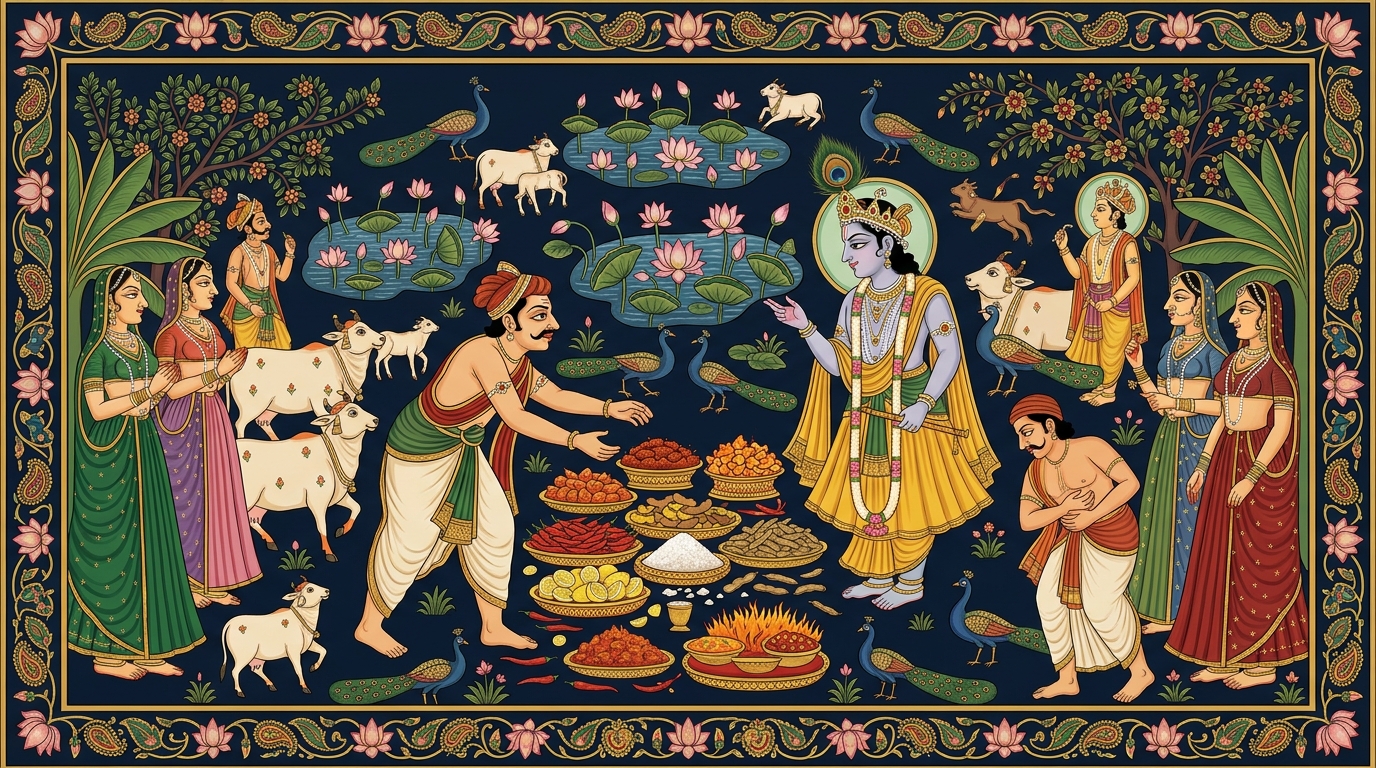
The autumn fair came to Nathdwara once a year, and Meera loved it more than
almost anything.
This year, Dadi gave her a few coins and a single rule: "Eat something, but
do not eat everything." Meera nodded so fast she barely heard it.
The fair was a roar of colour and smell. There were stalls of red-hot
chilli bhajiyas crackling in oil. There were piles of crisp, salty sev so
sharp with spice it made the air sting. There were tangy, sour golgappas
that made your eyes water, and fiery pickles, and dry roasted chana dusted
with so much chilli powder it looked like brick dust.
Meera started with bhajiyas. Then golgappas, one after another, gasping and
laughing. Then the spicy sev. Then a second plate of golgappas, because the
first had been so exciting. Everything was loud on her tongue: sour, salty,
burning, sharp. It felt thrilling, like the fair itself.
By evening, the thrill was gone.
Her stomach burned and churned. Her mouth felt scraped and dry no matter how
much water she drank. Her heart beat too fast and she felt jittery and
cross, snapping at a small cousin who had done nothing. Her head ached. When
Dadi found her sitting on a bench, hugging her stomach, Meera's eyes were
wet — not from chilli now, but from feeling miserable and a little
frightened by how bad she felt.
Dadi sat beside her and rubbed her back. She did not scold.
"There is a kind of food," Dadi said gently, "that is all excitement and no
rest. Too bitter, too sour, too salty, too hot, too sharp, too dry. The
restless heart loves it because it is loud. But the old book says it pays you
back later — with a hurting body, a churned-up mind, and sometimes real
sickness."
Meera groaned. "It was so good while I was eating it."
"Most loud things are," said Dadi. "That is the trick of them. The question
is never how it feels in your mouth. It is how it leaves you an hour later."
She helped Meera up, and they walked home slowly through the cooling night,
past the closing stalls, toward a glass of warm, plain milk.