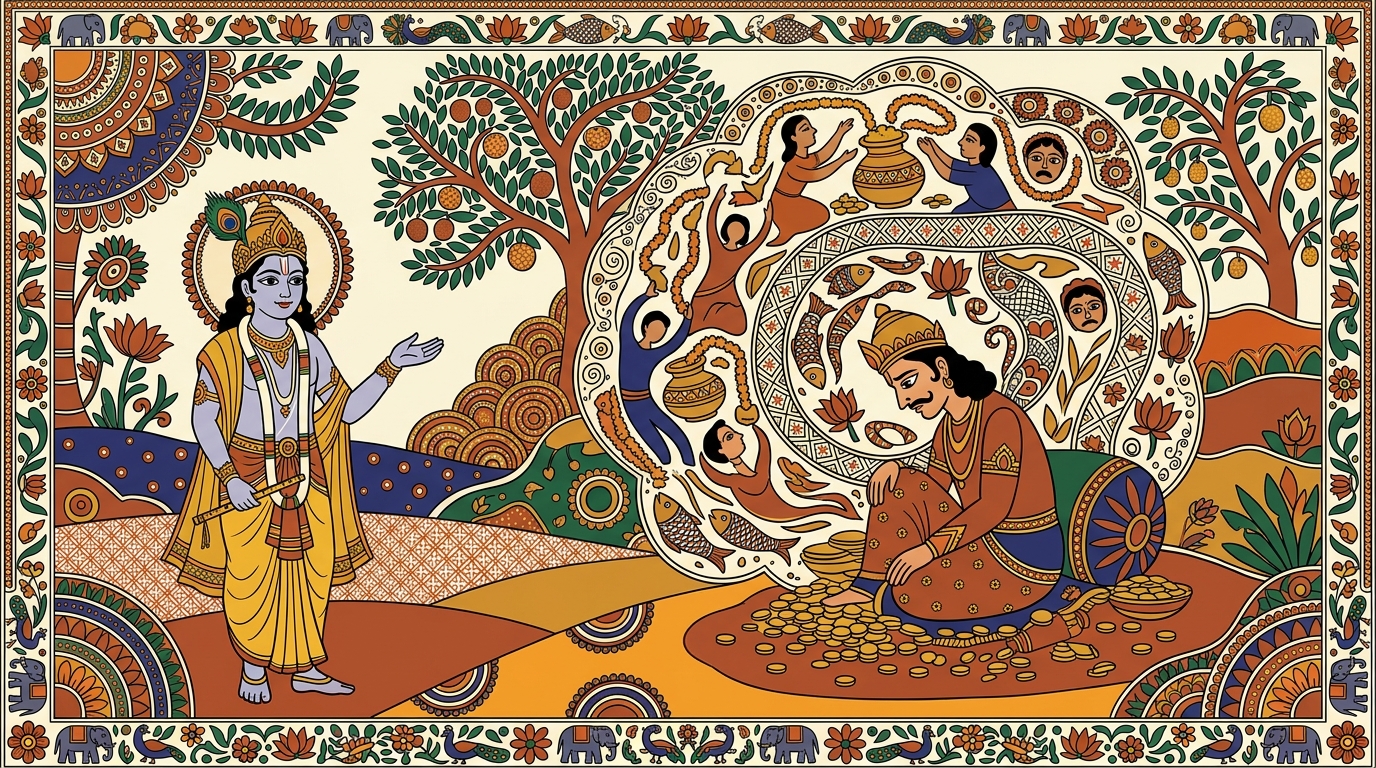
From the outside, Hiranyakashipu's life looked like one long feast. Music
in the halls, sweet dishes on golden plates, dancers, gardens, every
pleasure a person could name. He had decided, long ago, that this was the
whole point of being alive: to gather pleasures and enjoy them. "This
much," he told himself, "is everything. There is nothing higher."
But at night, when the lamps burned low, the king could not sleep.
For every pleasure he had gathered brought a worry with it. He had gold —
so he worried about thieves. He had power — so he worried about rivals. He
had feasts — so he worried they might one day stop. He had enemies he had
made along the way, and he lay awake counting them in the dark. The
worries were beyond counting, and not one of them ever left him; they only
multiplied, year after year, with no end he could see except the end of
his own life.
A servant once found him pacing the moonlit terrace before dawn.
"Maharaja, you have everything. What troubles you?"
"Everything," the king said. "That is exactly what troubles me. The more I
have, the more I have to lose."
He had built his whole life on the belief that enjoying things was the
highest goal, and so the things now owned him, and the fear of losing
them never slept.
"See the price, Arjuna," Krishna said. "When pleasure is set up as the
only aim, worry comes free with it, endless worry that ends only at death.
The grasping person is not relaxing on a pile of treasure. He is standing
guard over it, exhausted, all night long. A heart that wants peace must
aim at something higher than the next pleasure, or it will never set the
worry down."