Skip to content
Chapter 14 · Verse 18
🪈 Krishna speaks
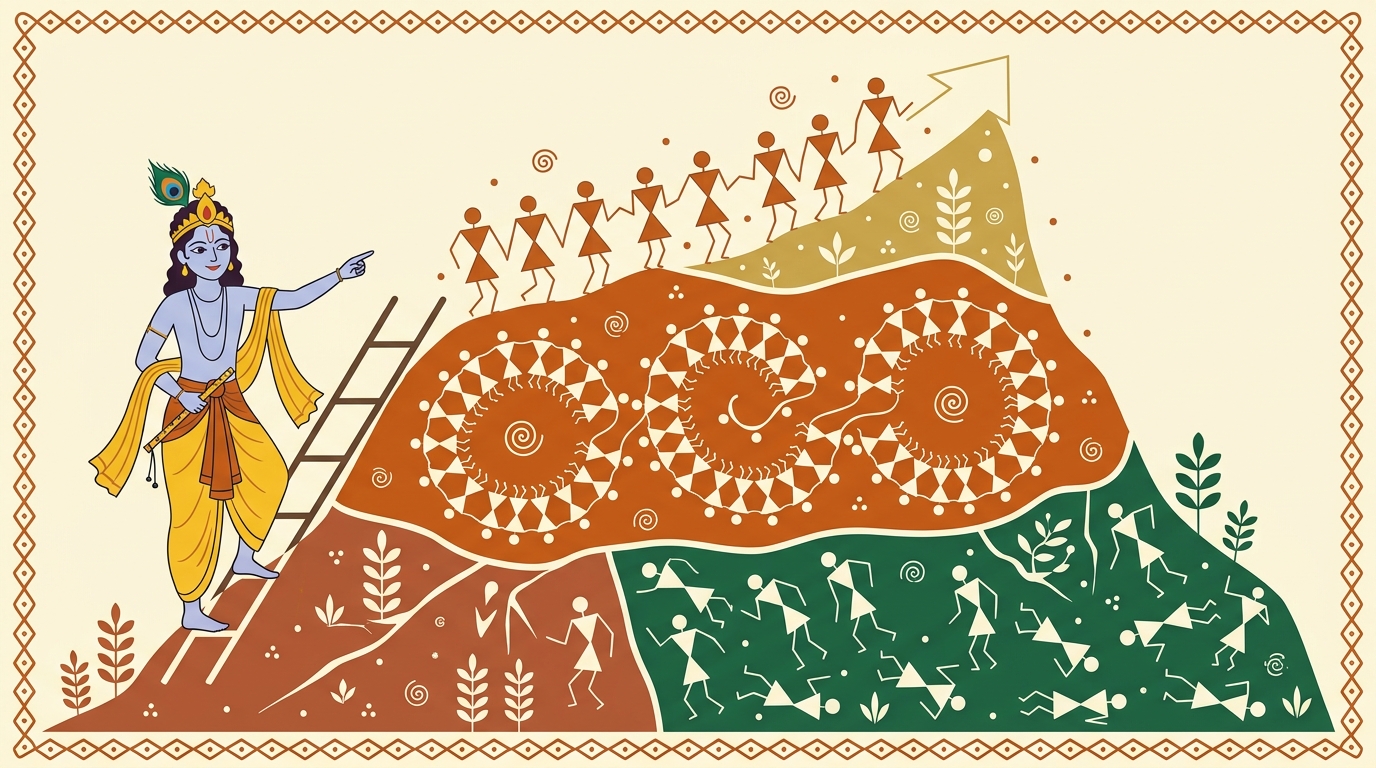
Illustration for Chapter 14, Verse 18

ऊर्ध्वं गच्छन्ति सत्त्वस्था मध्ये तिष्ठन्ति राजसाः। जघन्यगुणवृत्तिस्था अधो गच्छन्ति तामसाः॥

ūrdhvaṁ gacchanti sattvasthā madhye tiṣṭhanti rājasāḥ | jaghanyaguṇavṛttisthā adho gacchanti tāmasāḥ ||

Word by Word 9 words
ऊर्ध्वम्
ūrdhva upward, high

upward, higher

गच्छन्ति
gam to go

they go

सत्त्वस्थाः
sat being, real, good tva the quality of sthā to stand, to abide

those settled in sattva, those abiding in the calm, bright quality

मध्ये
madhya middle, midst

in the middle

तिष्ठन्ति
sthā to stand, to stay

they stay, they remain

राजसाः
raj to be stirred, to be excited

the rajasic ones, those full of restlessness

जघन्यगुणवृत्तिस्थाः
jaghanya lowest, hindmost guṇa quality, strand vṛt to turn, to behave, to function sthā to stand, to abide

those caught in the workings of the lowest quality, those stuck behaving by the heaviest strand

अधः
adhas downward, below

downward, lower

तामसाः
tam to be dark, to grow dim

the tamasic ones, those in the heavy, dark quality

gives the picture as a ladder. Those who live settled in , the calm, bright quality, rise upward toward higher and lighter places. Those full of , restless craving and busyness, stay in the middle, going round and round in ordinary human life. And those sunk in , heaviness, fog, and laziness, drift downward to duller, darker places. Which way you travel depends on which quality you let rule your days.

कथा

The Three Birds of the Mountain

From the Bhagavata-style telling of the gunas

The old tellers spoke of a great mountain with three birds who hatched on the very same ledge, in the very same season, and yet, by the end of their lives, they lived in three different worlds.

The first bird kept her wings clean and her eyes clear. She loved the high bright air, the wide view, the sun on the snow-peaks. Each day she practised rising — a little higher, a little steadier — until she could float in the pure thin air near the summit, where the light was endless. "Up here," she sang, "everything is calm and clear." She had let the bright quality lift her.

The second bird was restless and hungry. He flapped here and there all day — chasing this seed, that worm, this shiny pebble, that mate, never resting, never satisfied. He stayed always at the busy middle slopes, among the crowd of birds squabbling over the same branches, round and round, year after year. "So much to get," he panted. "No time to climb." The restless quality kept him circling in the middle.

The third bird grew heavy and dull. He stopped cleaning his wings. He forgot how to ride the wind. He huddled in a low dark hollow, dozing, grumbling, too foggy to remember the bright peak he had been born within sight of. Slowly he sank to the shadowed roots of the mountain, where the light never reached. The heavy quality had pulled him down.

A wandering sage who watched the three birds said to his students, "They began on the same ledge, mind you. The mountain did not choose for them. Each rose, or circled, or sank by the weather they fed inside themselves — bright lifts up, restless stays in the middle, heavy sinks low. And the good news," he added, "is that any bird can begin, today, to clean its wings and practise rising."

चिन्तनम्

Krishna pictures three directions: calm rises up, restless stays in the middle, heavy sinks down. The three birds started in the same place but ended up in different worlds. Which direction did your mind travel today — and what is one small way you could 'clean your wings' and rise a little?