Skip to content
Chapter 11 · Verse 31
🏹 Arjuna speaks
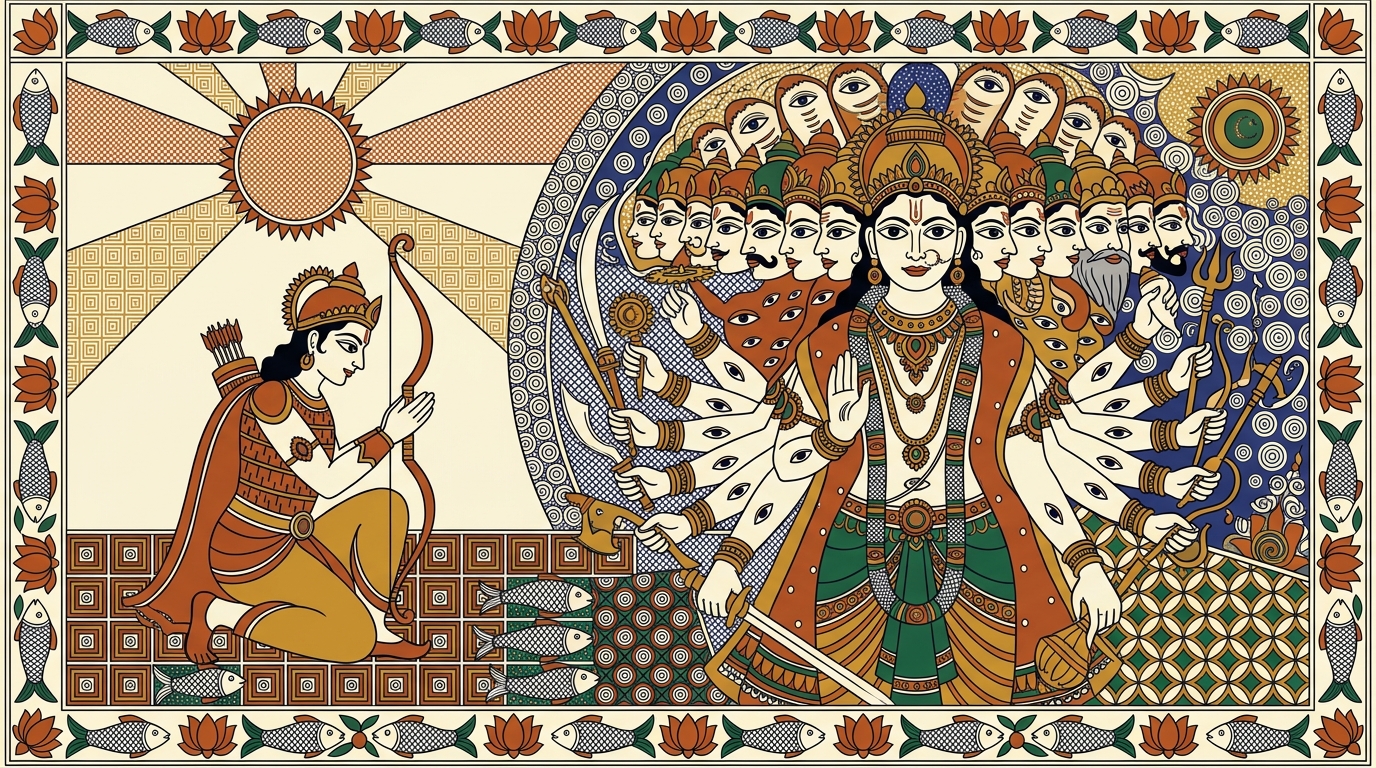
Illustration for Chapter 11, Verse 31

आख्याहि मे को भवानुग्ररूपो नमोऽस्तु ते देववर प्रसीद। विज्ञातुमिच्छामि भवन्तमाद्यं न हि प्रजानामि तव प्रवृत्तिम्॥

ākhyāhi me ko bhavānugrarūpo namo'stu te devavara prasīda | vijñātumicchāmi bhavantamādyaṁ na hi prajānāmi tava pravṛttim ||

Word by Word 19 words
आख्याहि
ā towards khyā to tell, to declare

tell me, declare to me

मे
mad my, to me

to me

कः
kim who, what

who

भवान्
bhū to be — honorific 'your self'

Your Self, You (respectfully)

उग्ररूपः
ugra fierce, terrible rūpa form

of fierce form, terrible in shape

नमः
nam to bow, to salute

salutation, a bow

अस्तु
as to be

let there be

ते
tvad your, to you

to You

देववर
deva god, shining one vara best, highest

O best of gods

प्रसीद
pra forth sad to settle, to be gracious

be gracious, be kind to me

विज्ञातुम्
vi fully jñā to know

to know fully, to understand

इच्छामि
iṣ to wish, to desire

I wish, I long

भवन्तम्
bhū to be — honorific 'your self'

Your Self, You (respectfully)

आद्यम्
ādi beginning, first

the first one, the primal being

na not

not

हि
hi indeed, for

indeed, for

प्रजानामि
pra forth jñā to know

I understand, I comprehend

तव
tava your

your

प्रवृत्तिम्
pra forth vṛt to turn, to proceed

purpose, what You are doing, Your action

pleads: tell me who You are, You of such fierce and terrible form! I bow to You — please, O best of gods, be gracious to me. I long to know You, for You are the first one, the source of everything. But I do not understand Your purpose. I cannot grasp what You are doing here, and it frightens me. So I ask: who are You, really?

कथा

The Question Arjuna Had Never Asked

An original story

For all his years beside , had never once asked the question. Why would he? Krishna was his cousin, his charioteer, his dearest friend. They had eaten from the same plate, joked together, fallen asleep in the same tent. Arjuna had thought he knew exactly who Krishna was.

Now he knew nothing.

The being filling the sky in front of him was beyond all the names had ever used. The familiar smiling face was gone, replaced by countless blazing faces and burning mouths. And so, like a child who has discovered that the world is far bigger than he imagined, Arjuna asked the most honest question of his life.

"Ākhyāhi me ko bhavān," he said, folding his hands. "Tell me — who are You?"

His voice was small. He did not ask the way a warrior demands an answer. He asked the way you ask when you have realised you are standing in front of something far greater than yourself, and you want, more than anything, to understand it.

"I bow to You," he went on, lowering his head. "O best of gods, be gracious to me. Please." He was not asking for victory or a weapon or a blessing. He was only asking for kindness — for the great fierce form not to forget the small frightened friend at its feet.

"I long to know You truly," said, "for You are the first one, the beginning before all beginnings." And then he confessed the thing that scared him most of all. "But I do not understand Your purpose. I cannot tell what You are doing. I do not know why the worlds are pouring into Your mouths, or what it means, or where it ends."

It was the bravest thing did that day — braver than any battle. He admitted that he did not understand. He stopped pretending he knew his friend, and asked, humbly, to be told. And in the silence after his question, the great form drew breath to answer.
चिन्तनम्

Have you ever realised that someone you thought you knew well was much more than you imagined? What is the bravest question you could ask when you don't understand something big?