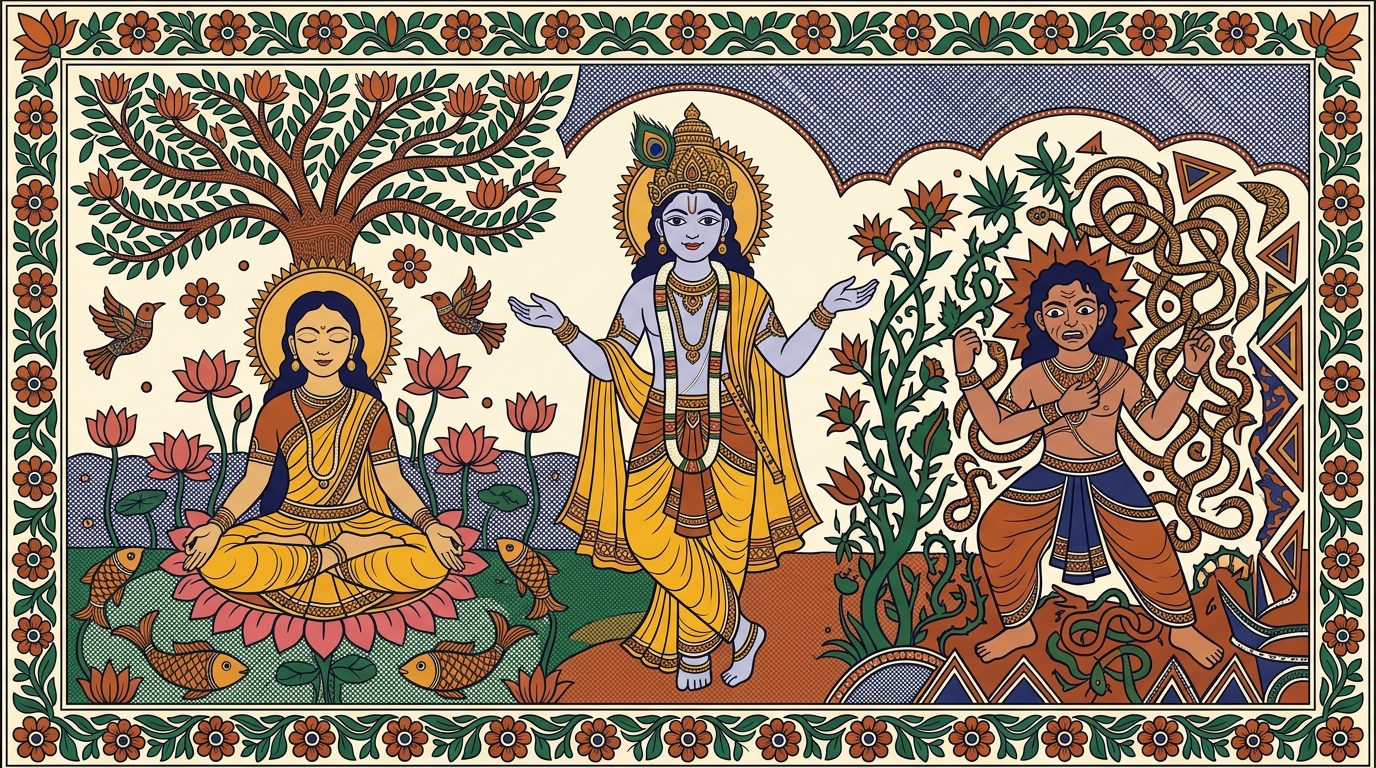
Two brothers set out one morning to walk to the next village along a dusty
road lined with tamarind trees. They had the same parents, the same home,
the same lessons growing up — yet inside they were as different as fire and
water.
The elder brother, Aruna, had spent years learning to watch his own anger.
Whenever it rose in him, hot and fast, he had practised pausing, breathing,
letting it cool before he spoke. It had not been easy. But now his temper
obeyed him the way a trained horse obeys the rein.
The younger brother, Vyala, had never bothered. When anger flared, he let it
run wherever it liked. His temper rode him, not the other way around.
Halfway along the road, a careless farmer leading an ox swung wide and the
ox's muddy flank knocked hard against both brothers, splattering their clean
clothes and nearly toppling them into the ditch. The same insult, the same
shove, struck them both in the same instant.
Vyala exploded. He shouted, he cursed, he grabbed a stone. His face went red,
his heart hammered, his whole morning was ruined in a breath. By the time the
frightened farmer hurried his ox away, Vyala was shaking, his thoughts a
storm of grievance. His own mind had turned on him like an enemy, robbing him
of his peace far more thoroughly than the mud ever could.
Aruna felt the same first spark of anger — he was not made of stone. But he
knew the spark, and he had a friend inside who knew what to do with it. He
drew one slow breath. He let the heat pass through him and out. "It is only
mud," he said quietly, "and the man is already sorry." He brushed off his
clothes, helped his trembling brother to his feet, and walked on with his
morning still whole and his heart still calm.
That evening, washing the dried mud from his shirt, Vyala asked, "How is it
the same shove left you peaceful and me wretched?"
Aruna smiled. "The shove was the same. The difference was inside us. I have
spent years making my own mind my friend. You have left yours a wild thing
— and a wild mind, brother, is the cruellest enemy a man can carry, because
it never leaves his side."