Aarav had decided to give up.
He sat on the steps behind the house with his arms crossed, refusing to
finish the wooden boat he had been carving for a week. "It's no good," he
said when Dadu came out. "Look at it. The hull is a little crooked. There's
a rough patch here. The sail won't sit straight. I worked and worked and it
still isn't perfect. So what's the point? I'm not going to do it anymore."
Dadu eased himself down onto the step. He took the little boat and turned it
slowly in his weathered hands. "Crooked here," he murmured. "Rough there.
Yes, I see." Then he looked up. "Come. Help me light the cooking fire."
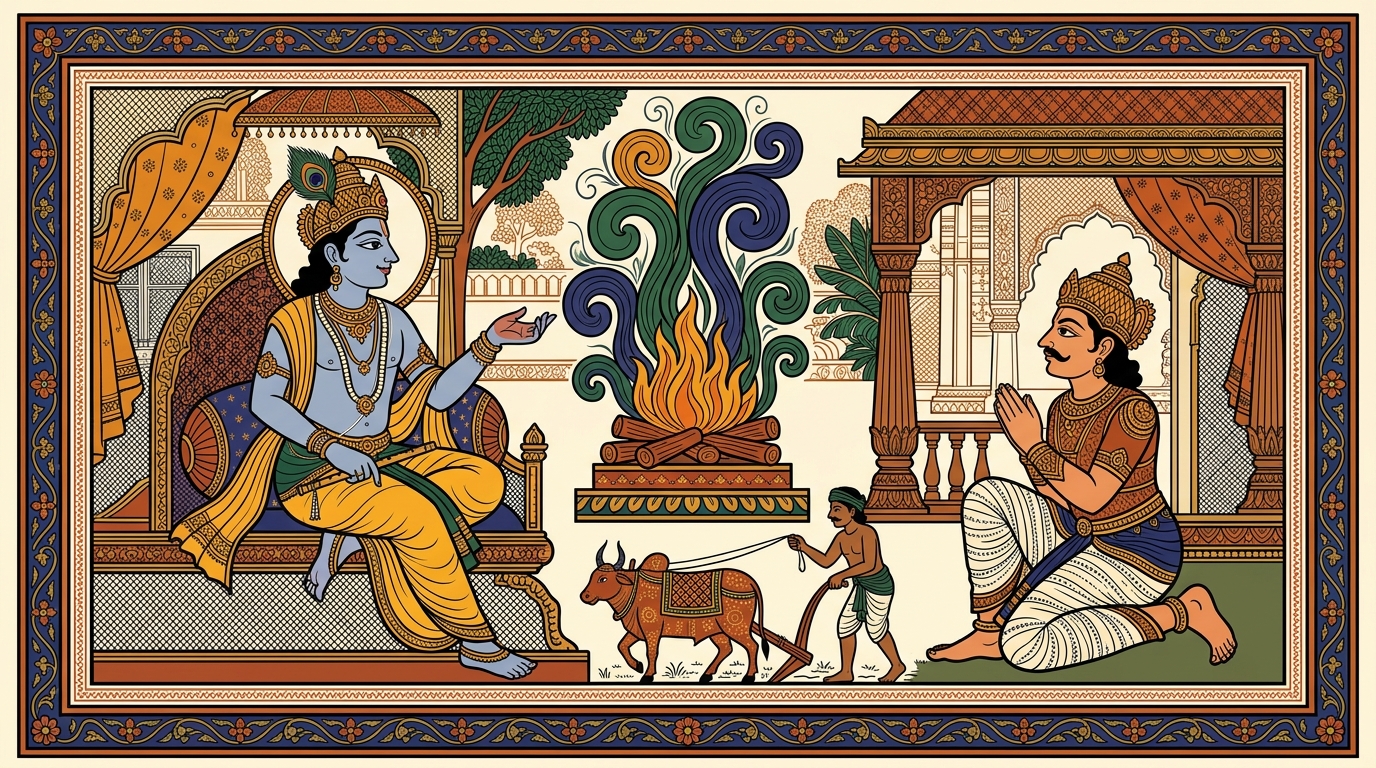
Puzzled, Aarav followed him to the hearth. Dadu struck the flint, and the dry
sticks caught. A curl of grey smoke rose up, stinging their eyes, before the
flames steadied into a warm, bright fire.
"There," said Dadu. "A good fire. It will cook our rice and warm our hands
tonight. Tell me — is there any smoke?"
Aarav coughed and waved his hand. "Of course there's smoke. There's always
smoke when you light a fire."
"Always," Dadu agreed. "Have you ever in your life seen a fire with no smoke
at all?"
Aarav thought. "No. Never."
"And yet we still light fires," said Dadu, "because a fire with a little smoke
is far better than no fire and no warm food. The smoke does not make the fire
worthless. It comes along with every fire that ever burned." He handed the
boat back. "Your boat is your fire, Aarav. The crooked hull, the rough patch:
those are only the smoke. Every single thing anyone ever makes or does has
a little smoke in it. The carpenter's table has a knot. The cook's bread has
a burned edge. Even the temple has a cracked tile somewhere. There is no
spotless work in the whole world."
Aarav looked at his small, imperfect boat.
"If you throw away every work that has a flaw," said Dadu, "you will throw
away everything, and do nothing at all. The brave thing is not to wait for
perfect work. The brave thing is to do your own work as well as you can,
smoke and all, and let it be." He smiled. "Now. Shall we see if your crooked
little boat can float?"
It floated. A bit lopsidedly, dipping to one side — but it floated, and it
sailed all the way across the pond, and Aarav cheered louder than he had in
weeks.