In an old city there once lived a lamplighter whose duty was simple and
important: each evening, as the sun sank behind the temple towers, he
walked the winding lanes with his long pole and lit the oil lamps so that
no one would stumble in the dark.
It was not glamorous work. No one threw garlands at the lamplighter. The
children did not gather to watch. And one cloudy evening, tired and
muddle-headed, the lamplighter sat down on a step and grumbled to himself.
"Why should I bother?" he mumbled. "It is dull. It is endless. I light
them, and by morning they have all gone out. I shall simply stop. I shall
call it renunciation, and people will think me very wise — a man who has
given up his work to seek peace."
So he leaned his pole against a wall and went home in the gloom.
That night the lanes lay in darkness. An old grandmother, carrying water,
missed her footing and fell. A merchant's cart tipped into a ditch. A small
child, lost and frightened, cried at a corner where no light shone. The
whole quarter grew uneasy and afraid.
A travelling sage passed through and heard the lamplighter boasting at his
door that he had "renounced" his lowly task. The sage shook his head sadly.
"You have given up nothing holy," the sage said. "You have only run from
your own duty because your mind was clouded and you could not see its
worth. That is not renunciation. That is the letting-go that comes from
darkness — tamasic, the giving-up born of confusion. True renunciation lets
go of greed and clinging. It never lets go of the work the world needs you
to do."
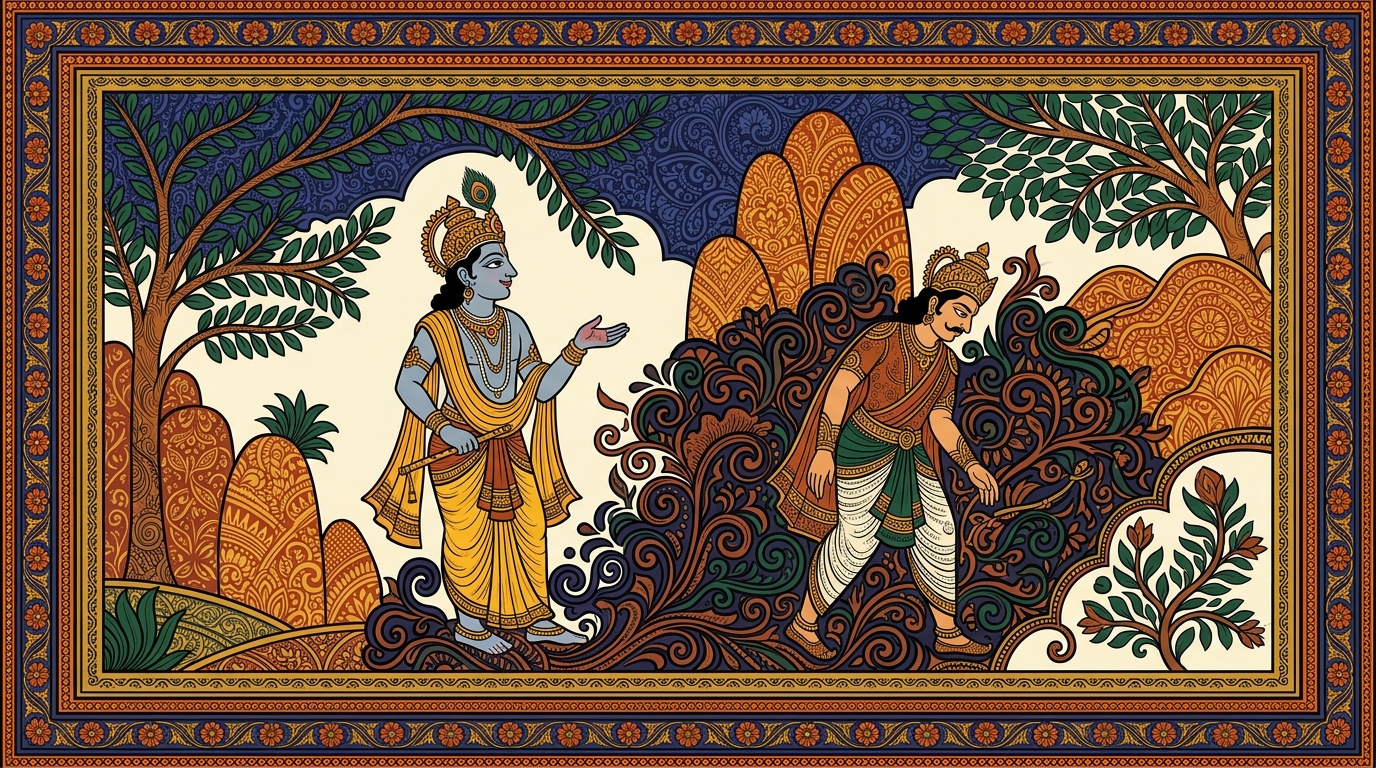
Far away, Krishna told Arjuna this truth so he would not mistake it. "To
abandon your rightful duty, Arjuna, simply because you are confused or it
seems hard — that is the lowest kind of giving-up, the kind wrapped in
shadow. Do not call running away by the noble name of renunciation."
The lamplighter, hearing the child still crying in the dark street, felt
the cloud lift from his mind at last. He rose, took up his pole, and went
out — and one by one, the little flames returned to the city.